


By Rob Garner and Elaine McAfee Bender
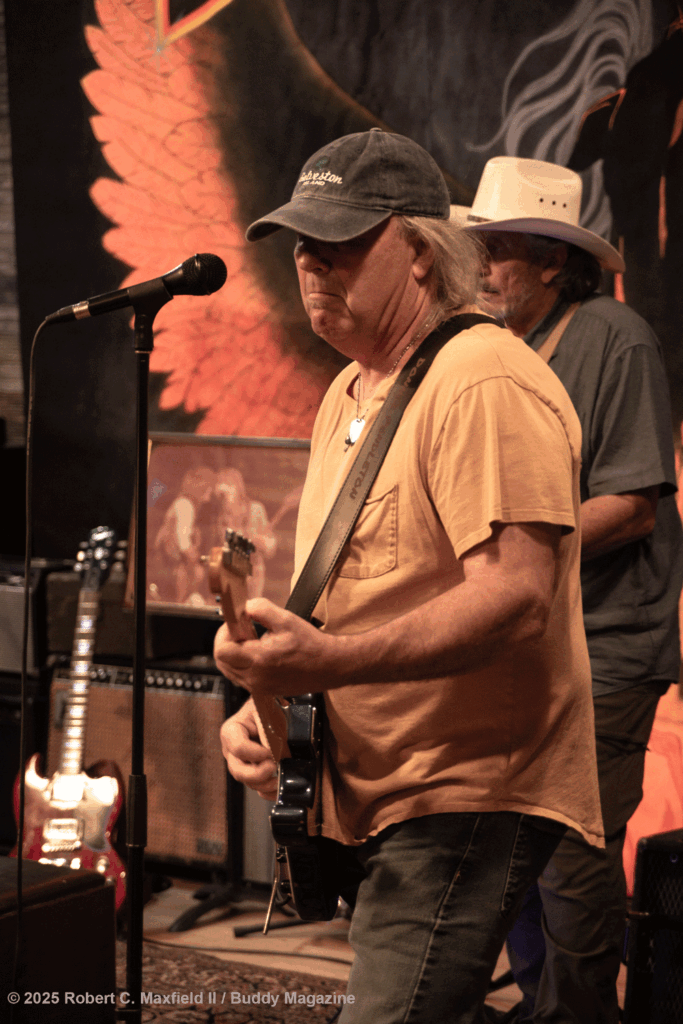
Cover photo by Robert C. Maxfield II
Blackhorse is performing with Point Blank at The Southside Preservation Hall in Ft. Worth on February 15. Click below for ticket and event info:
https://www.prekindle.com/promo/id/-2852852648511598615
___
Blackhorse has spent more than five decades carving out its own corner of Texas hard rock. The long-running three-piece first came together in the early 1970s out of Mineral Wells and Fort Worth. Their heavy, guitar-driven mix of Southern boogie, straight-ahead hard rock and early metal overtones made them a staple of the North Texas circuit, and a draw in rooms from Mother Blues in Dallas to packed clubs and concert halls across the Southwest area.
That reputation soon carried Blackhorse far beyond local stages. The band toured nationally with many of the era’s biggest names, opening shows with Sammy Hagar, Humble Pie, Alice Cooper, Lynyrd Skynyrd, Grand Funk Railroad, Joe Perry of Aerosmith, Alvin Lee of Ten Years After, Pat Travers, Robin Trower, Steppenwolf, Trapeze, Foghat, Molly Hatchet, Point Blank and others.
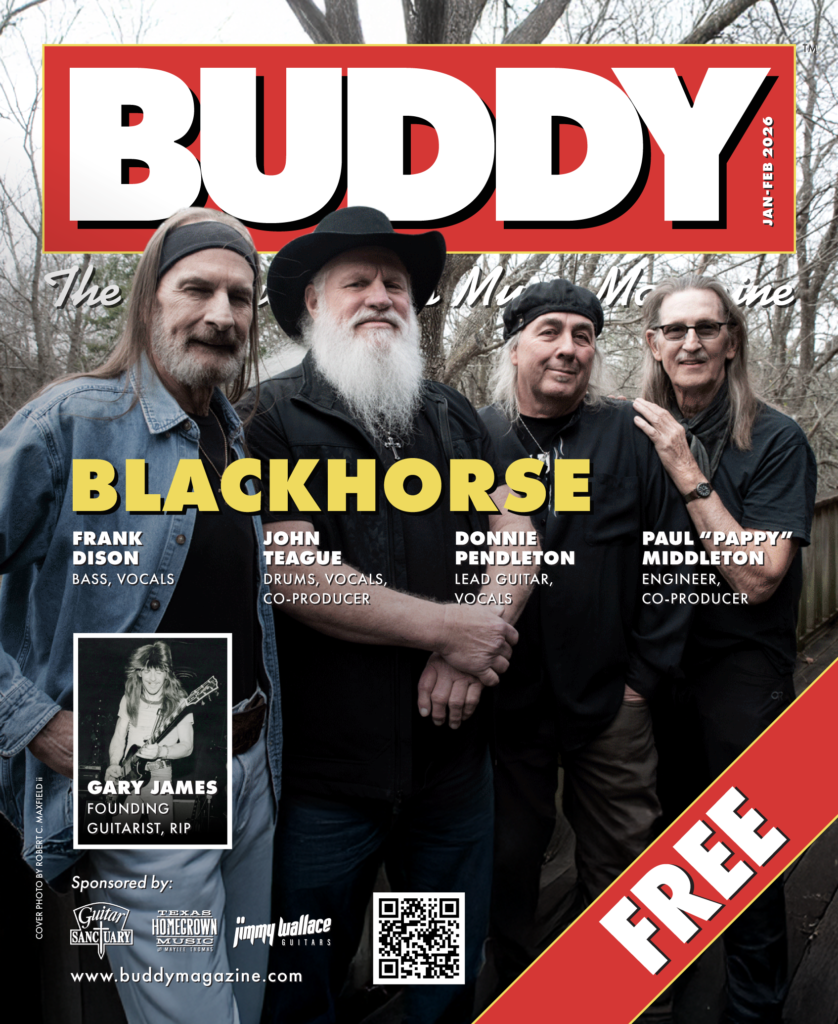
Their 1979 album, long out of print and heavily bootlegged overseas, has since taken on a cult life of its own. In a recent Rock Candy magazine readers’ poll, the record was ranked among the top hard rock albums of 1979, finishing one slot ahead of ZZ Top’s Deguello and underscoring the band’s enduring appeal to hard rock fans, domestic and abroad.
Today, Blackhorse is both a working band and a legacy act, still writing, recording, and preparing a new release, “Blackhorse 2. Legacy: Family and Friends,” while fielding messages from fans across Europe and beyond.
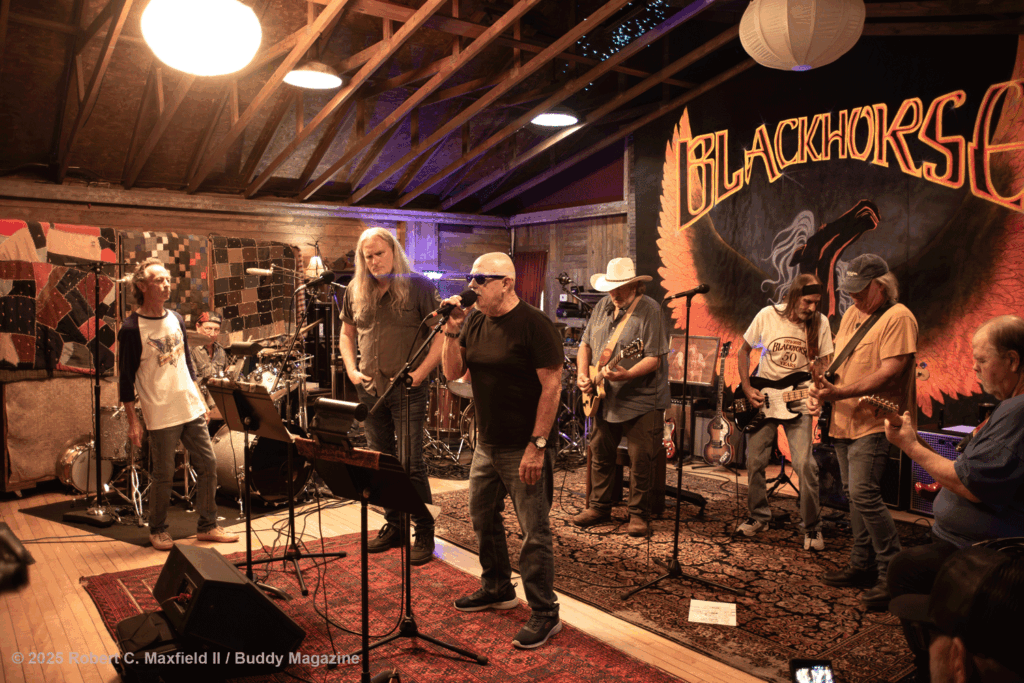
We visited the band at Palmyra Studios in Palmer for an interview. In this Q-and-A with Buddy Magazine, founding drummer John Teague, bassist Frank Dison, guitarist Donnie Pendleton and engineer Paul “Pappy” Middleton (who also played bass for the band in the 70s and early 80s) trace the band’s path from early Fort Worth clubs and near-miss major tours to cult status, bootlegs, and staying together for over 53 years.
Buddy Magazine: You’ve been together over 50 years. Can you talk about how Blackhorse got started, the personnel when they started, when different players came in and out of the band?
John Teague: Frank started off because he’s the co-founder with myself and Gary James, who is resting right out here. And we put his ashes out here. Little white picket fence as you step out the door, right over here. And today is his birthday.
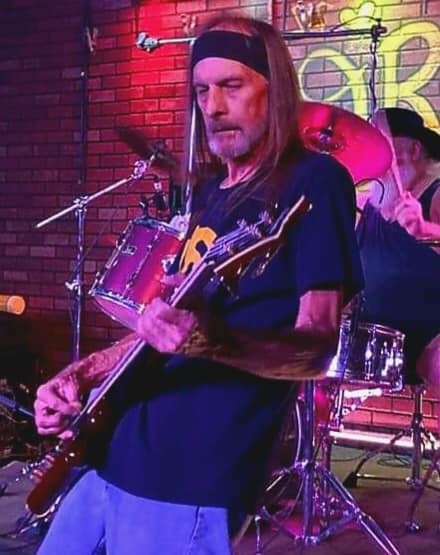
Frank Dison: I moved to Fort Worth in about ‘71. And there was the Ridgmar behind the wall area. There were all kinds of musicians there, you know. I wanted to get back into playing and I couldn’t find the right mix. And I knew this guy right here.
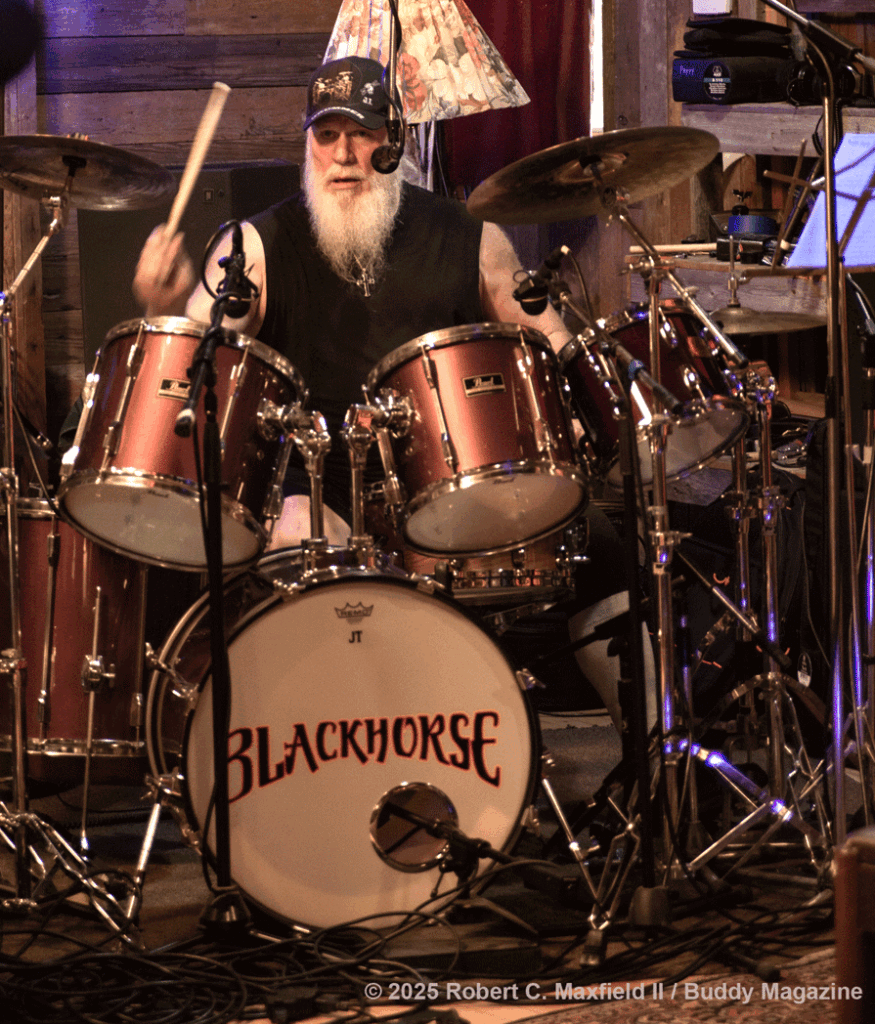
John Teague: But we were all from Mineral Wells. Frank had moved to Fort Worth.
Frank Dison: I went over to Mineral Wells, found John, and said, “Let’s get to picking.” And so we picked a little bit and we found out that Gary James had moved back from LA and retired from music. Long story short, John had told me that Gary had moved back and was working. I said, “Well, let’s go look him up.” We played one night with David Sisemore – he was an old friend of ours we had played with before. And then he got to feeling bad one night. So Gary and John were coming back here. John and I went over to his house and he said, “Man, can’t let you go up there because his wife does not like me.” We got with Gary and talked him into coming down and playing with us that night. And I tell you, the word was “magic.”
John Teague: Well, he said he was retired, but we had to talk him out of it. He had already sold his guitar to his dad, who’s a musician as well. So he said, “Well, all right”, because we mentioned money. And then he said, “Okay, well, let me go borrow my [guitar] back from my dad. So we did some rehearsals down there and that’s where he was.
Buddy Magazine: That’s a pretty young age to be retiring. What made him want to retire? I’m assuming he was around 21 or 22 by that time.
Donnie Pendleton: How many labels was he on?
John Teague: They were on five, six of them. Top 40 hit on the Billboard. The Double Bubble Trading Card Company of Philadelphia. It was back in the bubble gum [pop] days. But they did hit the top 40 with a bullet. When they did this record, the record company wanted to change their name.
Frank Dison: When bubblegum music was in.
John Teague: Yeah, it was like rock and roll.
Paul Pappy Middleton: They said they’d go into a radio station in New York and dump boxes of bubble gum on the desk. And it was a genre. A lot of bands I listened to, when I was growing up, were in this genre.
Frank Dison We started playing and in a matter of weeks. John moved over, Gary moved over, and our road crew. And then we started taking over Fort Worth and started playing all the main places. And they asked us back and so the rest is kind of history. I mean, as far as that goes, we stayed together doing Fort Worth and around the Tri-State area for, yeah, three or four years. I left the band after a few years and then Paul got into the band about ‘74.
Paul Pappy Middleton: I walked into a club called Licks. And my good buddies were in a band called Point Blank. They were over at Wild Bill Randolph’s house, writing the music for the Hard Way album. They were managed by Bill Ham [ZZ Top manager]. And so I was over at their house one night and Bill had a girlfriend, who was just kind of a “hanger -oner.” And he said, “Pablo, would you go to Fort Worth and see if you can book this?” Because any time they came off the road, they changed their name to the Aliens via contract with Ham. And they knew they were getting ready to do the album. They had to write all the material in a week and then go to Memphis, do the album for a week, and then come back home and starve to death. And so I went over to try to book them a gig and walked in on these guys and they quit playing for a minute. And I’m talking to the manager on a Tuesday night at 9 o’ clock and there was nobody in the club except the band.
John Teague: It was a six-nighter, man. We had to take the bad with the good.
Paul Pappy Middleton: Yeah. At Wild Bill’s, a kind of girlfriend, he taught me to talk to her so the band could really concentrate on writing music. I’m talking to the manager of the club and I hear this thing coming off the stage and I couldn’t even talk to the guy anymore. I started listening to him playing, and the guy said, “hey, want to go back in my office, you know, do a little…you know, like this.” The girl had one leg climbing over the bar. I’m sitting there going, “give me a few minutes.” And we jammed for almost a couple hours that night. And then I’ve been here ever since.
Buddy Magazine: So, following the chronology from the time you started, how long did that stint last?
Paul Pappy Middleton: Gosh, almost 10 years.
John Teague: So we’re talking about 10 years. ‘74, up through late ‘82. ‘83.
Buddy Magazine: When did Gary start and stop in this timeline? Obviously from the beginning…
John Teague: He stayed with us til the end [Gary passed away in 2015]. We stayed that way until about ‘83. Late ‘83, maybe. The only change we made is we picked up John O’Daniel, who wanted to come in and sing with us because Bubba Keith joined Point Blank, and John quit. They wanted both of them, but he didn’t want to do two singers.
Buddy Magazine: That’s interesting. I never knew that.
John Teague: Yeah, well, don’t quote me. He came in for a couple of years. He was there still when Paul left.
Buddy Magazine: Donnie, you’ve been real quiet up to this point, when did you join?
Donnie Pendleton: I’m a good listener. Started off in Blackhorse. With Kevin Davis and Tuffy Burkhardt.
John Teague: And that was in ‘84.
Buddy Magazine: And you said Gary never left. So you have two guitarists at this point?
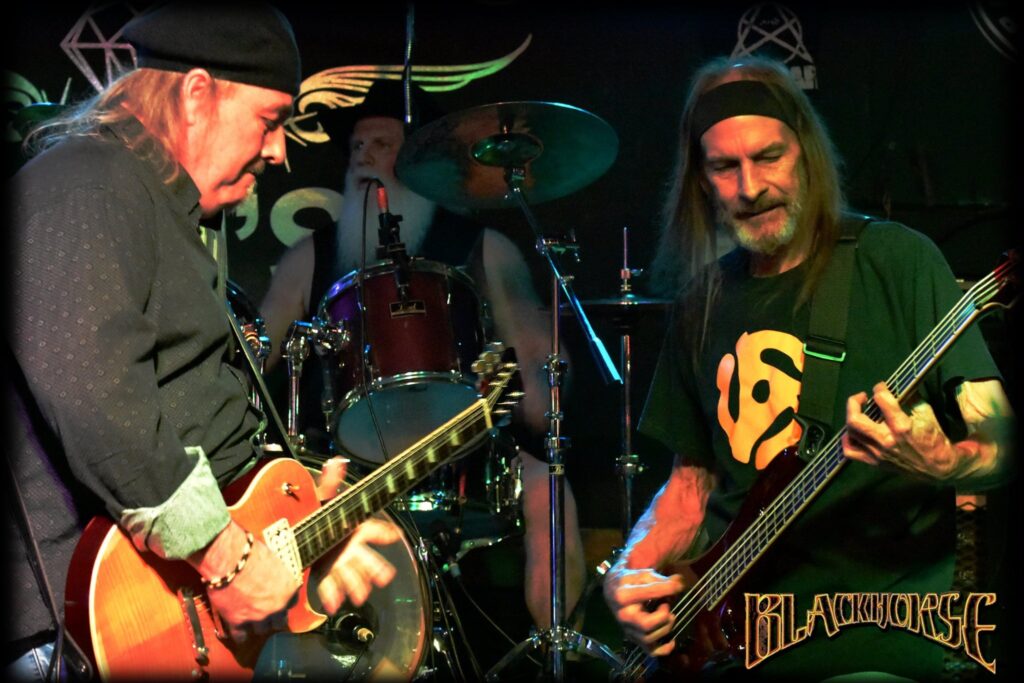
John Teague: At this point, we met Donnie, [he] sat in with us, same type scenario. We were planning on going big and adding a keyboard anyway, so we wanted two guitars. We wanted to end up with two guitars and keyboards and be a Journey type. That’s when we changed, morphed into The Cauze, we did an album. Laura Church got involved, and all that. But that’s where Donnie came in, was in ‘84, when were playing Joe’s Garage.
John Teague: We were morphing.
Donnie Pendleton: Yeah. And y’ all were actually finishing up some dates.
Donnie Pendleton: The Cauze album was already in production, and I came at the end of that album.
John Teague: We picked him up, played him live several times and then threw him in the studio. And he took up residence there and played some guitar with us on some of the tracks. And so, I mean, we were glad to have him. And he stayed with us through the album. Then we picked up Jay Hamilton on keyboard. His brother Mike Hamilton played keyboards on The Cauze album, and was also keyboard player for Point Blank. We were released in 17 states with that album [The Cauze]. Finished it in the summer of ‘86. Got released between ‘86 and ‘87.
Buddy Magazine: You mentioned you had airplay on VH1.
John Teague: We were getting rotation on VH1. And, MTV played us.
Donnie Pendleton: I got a call in the middle of the night, and they said, “Hey man, you’re on MTV” And I’m like, “Really?” He said, “Yeah, you got to check it out!” I said, “I don’t have cable.”
John Teague: Made a big difference in the way music went from there on out.
Paul Pappy Middleton: Sure did.
Donnie Pendleton: I think it was on the Basement Tapes or something like that.
John Teague: We tooled along there for a good many years. During the middle of all of this, when Paul left, we picked up another bass player via another guitar player, and we actually went to four-piece right before Donnie came in. And that was Tuffy Burkhardt, who’s been in Tuff Enough now, and Kevin Davis. We said, “Well, hey, we don’t have a bass player. We want you to come over and play because we want another guitar player.” Anyway, we lost our bass players. Can you just bring somebody that knows how to thump, you know, we don’t have to have to keep him. So he brought Kevin Davis – who now plays with Incognito – and then when he started playing and singing, went, well shit, let’s hear him. So we just kind of shifted from Tuffy to Kevin Davis. He ended up being a diamond in the rough and we kept him. And you know, 10 or 15 years later, they were still with us.
Paul Pappy Middleton: Yeah, when I left, I got offered a really lucrative job touring. And when I came back the first time and Kevin was the bass player, I’m looking at this young, good looking guy with this beautiful voice and he’s playing his ass off. And I went, “Well, there went my gig.”
John Teague: And blonde hair about down to here [motions below his waist].
Donnie Pendleton: To hear Kevin tell the story, he says that he asked them for weeks if he was in the band yet.
John Teague: We were working his ass off. We didn’t have to tell him.
Donnie Pendleton: He said he didn’t know.
Buddy Magazine: What year did you start your engineering gig, Paul? Was that ‘83?
John Teague: He left us to go out with Julio Iglesias.
Paul Pappy Middleton: And a studio that we recorded in a couple of times was owned by a guy named Buford Jones, a Showco engineer and their top engineer. He was doing all of the biggest artists at Showco.
John Teague: Yeah, he went on to do Pink Floyd.
Paul Pappy Middleton: I went on that tour because I wanted to see what could happen there. And then we went to Australia, and the next thing I wanted to see or be a part of was the Opera House. Went there for a party where he was awarded three platinum records while we’re sitting on the deck looking out of the Opera House.
John Teague: All this time we were back here struggling our asses off, but we were moving forward. We never did move backwards. We always moved forward.
Buddy Magazine: You guys are playing with Point Blank this February 15 in Fort Worth. Do you want to talk a little bit about Point Blank?
John Teague: We met them back when Frank [Dison] was still with us, then we were playing Fat Alberts, which turned into Spencer’s Corner, same building. Our agent was trying to book them and. And so he brought them in to hear us and to meet the club owners and stuff, try to get them in there. And they came up and sat in with us and it was the original band, you know, it was John O’Daniel, Rusty Burns and Philip Petty, who we called Midget. He was a little guy, bass player. Bass was bigger than he was. Buzzy Gruen on drums and Kim Davis on the other guitar.
Frank Dison: We got them gigs from Fort Worth to Dallas.
John Teague: Yeah, their agent was also our agent. They were getting ready to go with Bill Ham. After they played with us that night, they became friends with us and we’ve been friends ever since. And then a few years later in the 80s, we started doing some shows with them. You know, some meaningful shows all over. Everywhere. Touring with them. They were out with Journey at the time and Loverboy. And when they came in from their major road shows, they did secondary shows like Kane’s Ballroom, Billy Bob’s, places like that, those size rooms all over the country.
We became really good friends at that point. So everything came full circle. And now that everybody’s gone, Bubba Keith and their widows decided to unlock the name and let Bubba go ahead on with it. Well, he remembered those shows we did with them back then, what a good fit it was. So he gave us a ring. Actually, he came to see us at the practice hall over there a few weeks back and told us what he was doing, and asked us if we wanted to be involved. So we’re billing it as Point Blank and Blackhorse.
Donnie Pendleton: It’s kind of like a homecoming.
John Teague: It’s a great pairing, especially since they have Kevin Davis, my old bass player, and Tuffy Burkhart, my old guitar player. They’ve got some killer musicians.
Buddy Magazine: They were solid.
Paul Pappy Middleton: Right.
John Teague: Paul’s going to do the engineering. It’s going to really sound a lot better than that little room they were in.
Paul Pappy Middleton: Yeah, right before Rusty Burns passed and John O’Daniel passed. They came to me after they were [with] Bill Ham. Took them off the road when they put out the album that was going up. Bubba [Keith] had written “Nicole” about his daughter, and it was like in the top 10 in Chicago and New York. And he took them off the road and while Bill Randolph the bass player calls me up, he says, “Come on over.” “We’re out at the Candlelite Inn Restaurant in Arlington.” That’s the first place I could buy beer when I wasn’t old enough to do it, because the waitresses were like, “Are you going to cause any trouble?” “No, ma’am”.
Buddy Magazine: You know, it’s Bubba Keith’s family who opened the Candlelite Inn Restaurant.
Paul Pappy Middleton: Sure. They told me the address and I saw the Candlelite sign out in front. There’s a little building off to the right. Yes, that was the original Candlelite. It had at one time been a gas station. Bubba’s dad bought that place and turned it into a diner. It had something like four tables in it?
Buddy Magazine: That little building’s still there, actually.
Paul Pappy Middleton: Yeah, it is still there in the other building. It was like a storage place. I got out there and Point Blank was practicing in there. So, I went in and met Bubba Keith. I had met Bubba a long time before, but I had no idea that his family owned the Candlelite Inn.
Buddy Magazine: Do you know who owns it now? Kind of kept it in the music family. Alan Petsche from The Pengwins.
Donnie Pendleton: Yes.
John Teague: I didn’t know that. I knew the Candlelite through Bubba Keith, but I didn’t connect the dots.
Donnie Pendleton: My last record was [on Alan’s label].
Buddy Magazine: Okay, well, what happened was that the Candlelite building was being sold off by auction. Alan Petsche put his bid in and kept going higher because the business next door wanted to demolish the building and turn it into a parking lot. Alan stepped up even higher with his bid and said, “No, you are not destroying a favorite restaurant which has been there for decades.”
Donnie Pendleton: Correction on that. It was Bonnie [Petsche].
Paul Pappy Middleton: She’s the boss.
Donnie Pendleton: She said, ‘I will not be married to the man who closed down [Candlelite Inn].
Buddy Magazine: Bonnie and Alan Petsche wanted to salvage this wonderful place, which had been the setting for many happy memories. And another parking lot just wasn’t ringing a whole lot of happy bells for anybody.
Donnie Pendleton: You know, the first time over there I met Bubba was a happy occasion. Justin, my oldest son who’s now 45, was just three days old. Vicki and I went to Candlelite Inn to eat. We heard music coming from the storage building next door. We went over there and it’s Joel Parks, who had been with Head East and Ricky Lynn [Gregg] and all of them – Joel Parks, Tony Black on guitar, Bubba Keith on vocals. That was the coolest thing I had ever heard in my life.
Paul Pappy Middleton: Well, I go over there, they called me out, ‘yo, we need to talk, man’. And so I went out there and Bubba was in the band. They had a hit record going up the charts, and [Bill] Ham took him off the road. That’s when Rusty [Burns] and everybody in the band agreed they wanted to get out from under that contract. And so they borrowed like $250,000 from some investor friend of Rusty’s and went after Ham. And it all fell through because one member of the band Ham had bought out. The band all kind of crumbled right then. And when they finally came back with Rusty [Burns] and John [O’Daniel], for a little while, we put together a thing called the TexiCali Tapes. And it was John, Rusty, and me, and was gonna be Gary. It turned into Aynsley Dunbar on drums, and Andy Timmons on guitar. We played the Blue Cat one time.
Buddy Magazine: Did Aynsley play Blue Cat Blues?
John Teague: Yeah. He also came over when we had kind of a wake or a party for our lights man, Big Ronnie in Mineral Wells. Aynsley showed up at that, too. We just jammed out.
Paul Pappy Middleton: John [O’ Daniel] and I had talked to this record company guy saying this guy’s looking for a project. And so I called him up and, literally, I’m living out in East Texas on a farm, and all of a sudden, two days later, this Mercedes drives up and it’s Aynsley [Dunbar] with all his drums in it. I had Rusty, John and me. This guy showed up, and he was going to bring a guitar player who played with Steely Dan. And the guy with Steely Dan got offered a soundtrack writing the music for a major motion picture. This was right going into the fall. So he said, ‘Man, I’ll be busy all the way into the new year, so I can’t come.’ Now I’m sitting there with my phone book wondering who can I call? I’m looking at Andy. And I knew Andy. He probably made the most money doing sessions of anybody in town. And I knew that he worked seven days a week, just about. I called him up and all he could say was “Rusty Burns, Aynsley Dunbar, you, and John O’Daniel? Oh, boy, my old lady’s gonna be pissed.” He had his first weekend off in years. And then I look out and I see him driving up my road out there on the farm, and here he comes. Two days later, and it’s like a Thursday. We went into Sound Logic, Chopper’s [Tim Grugle] Place.
Buddy Magazine: And any recordings of that?
Paul Pappy Middleton: Yeah. It’s called the TexiCali Tapes. And I still got it. I’ve had a couple of record companies wanting me to talk to them about it, but they don’t want to give any money.
You know, and then they wanted me to spend my money to remix it. And the way I mix it, I put Rusty on the left, Andy on the right. So anybody that listens to it in any way or form or fashion, they could always know which guitar player was doing it, because they just lit it up. When Rusty called me up and said [in early 2000s], hey, man, you know, we’re trying to do a thing in Europe. And of course, Bill Ham wasn’t involved anymore. So, I was the tour manager, production manager, front of house, sound guy. And we all went to Europe and went over for about two or three weeks, something like that.
And so it was, you know, it was a good gig, and we had a lot of good talents. And we did that tour twice.
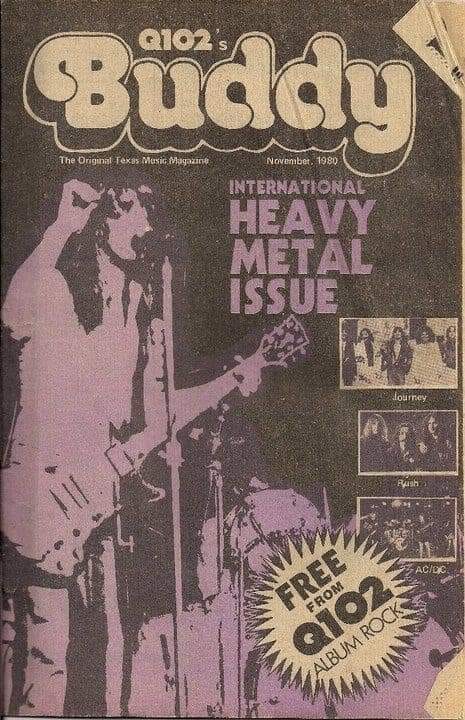
Buddy Magazine: Looking back, Blackhorse seems to be a bridge from Southern Rock and boogie going into a little to Hard Rock with tinges of maybe a little bit of metal. And Gary was on the metal cover of Buddy. Did you ever think, “that’s not really accurate?”
John Teague: Well, we were hard. I mean, it could be hard. We could be. I mean, we played some Eagles and things like that in our cover set. And then we got one on the album called “Can I Find My Way Home”. It’s kind of a slower one. But then just as you get used to that, it goes into the end of it, which is hard.
Donnie Pendleton: I’d say it is “Hard Rock.”
Paul Pappy Middleton: But I could hear Southern feel to it.
Donnie Pendleton: Yeah, it’s still hard rock.
John Teague: Just old school Rock, man.
Buddy Magazine: There’s so many different labels, but straight hard rock, that’s the way I’ve always thought of you guys. But when you listen, really, you know, the vocals sometimes go into a higher falsetto voice. It’s kind of looking forward a little bit into metal.
Donnie Pendleton: Influences and bands like that, Deep Purple. You know, all those kind of bands.
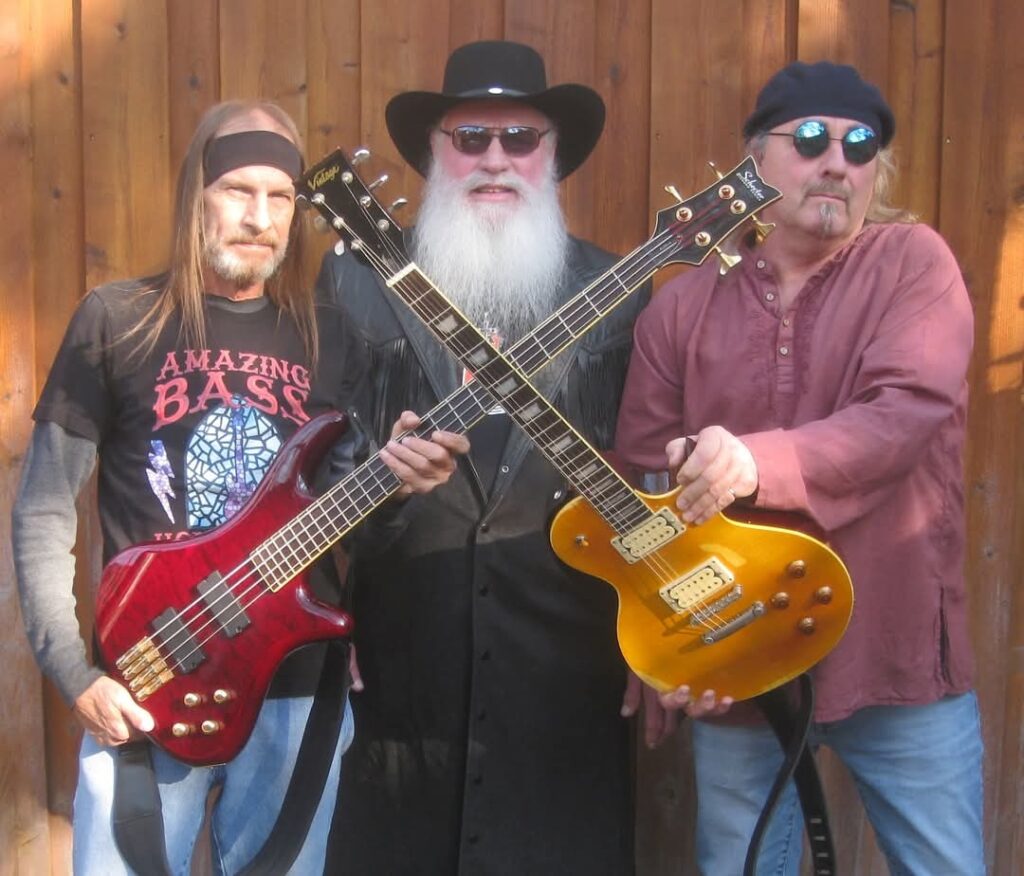
John Teague: Yeah, to me, a Grand Funk for sure. We were always influenced by them because they were a three piece band and they did a whole lot of. Their direction of music was a whole lot agreeable to us. We might not have sounded like them, but our, you know, that hardness of music is what we think.
Buddy Magazine: Do you think you influenced some of the metal, Texas metal, to come after that? With you guys being the most visible at that time in hard rock. Some others have written that as well.
Paul Pappy Middleton: One of the things that was a major thing that happened. We did the record. And I had a friend of mine named Mike Morris and he worked for Concerts West and was promoting the show from California to here and all over the place was doing the Zeppelin tour. And Mike said, “Hey man, give me a record and when I’m in LA, I’ll see what I can do.” And sure enough, he calls him back up he says, “Some of the labels are really interested in you guys.” And, you know, because we were unsigned. We turned down Bill Ham two or three times. So I go out there to Epic Records, who was really into the band sound and everything. And this was after the Van Halen thing.
We got a guy that we met down in Houston when we were playing down there, did the VH airbrush artwork for their T- shirts. Van Halen, you know, it’s like the number one swag T-shirt.
John Teague: Ralph and Kevin.
Paul Pappy Middleton: Yeah, Kevin White. And they came to the show and said, “Hey, man, would you let us do a T shirt for you?” And so on their own, they did the T-shirts that we’ve got, we’re using today. And then they took our record out to Van Halen’s people when they delivered their artwork for their T-shirts. And their manager, Noel Monk. And so he gets the record, plays it and says “This has to be perfect for the tour.”
Because they had sold the tour out in like a day and a half for three and a half months. That was 1980 world tour. Van Halen were like, number one in the world. And we were playing on the tour.
John Teague: And so, yeah, and this lasted about six weeks. We were walking around, getting ready and our heads in the air.
Paul Pappy Middleton: I had calls with their management. And Barbara Skydale from Premier Talent was booking Van Halen. So now they’re talking to us. I sent a thing to her saying, “is there a tour bus, a crew bus or something that would have room for the band and our crew, which would save us from driving along with the tour. And can we put our gear on one of the semis.
And the last thing I said, ‘we’re also a wireless band’. You know, we had just gone wireless and me and Gary could go anywhere we wanted to go. I remember standing out on console of Kane’s Ballroom, you know, on a table beside the picture and Gary.
John Teague: Go out and sit in people’s laps in the front row and do his lead.
Paul Pappy Middleton: Yeah. And so she sends all that to the management and Van Halen got all their stuff and they went, “Yo, a wireless three-piece band from Texas?” They demanded to see the album and hear it. And as soon as they did, they were ‘nah, nah, nah, we want a band they’ll throw food at.’ And so Noel calls me that next Sunday and I’m sitting at home, and tells me a week before the tour started in Colorado Springs, “ I’ve discussed all this with the band.” Yeah, they kicked us off the tour, you know, a week before were going out.
We canceled two or three months worth of gigs that were already booked and. And so we didn’t get it. And so as soon as that happened, I mean, while that was all going on, all the record labels were chasing us because here’s an unsigned band that’s going to be in front of Van Halen, the biggest selling tour right now. There’s money to be made. And as soon as we got kicked off the tour, we didn’t hear another word from them.
John Teague: Well, it was David Lee Roth that kicked us off. Yeah, we later found out documentation on that through themselves.
Paul Pappy Middleton: I was rehearsing with Bonnie Raitt in LA to start our tour and it’s a sound company that we use – Schubert Systems – and they have a big warehouse in Burbank that has all the sound system stuff. It also has three big rehearsal spaces and a whole bunch of storage areas so a band can use. Bonnie kept all of her gear in one of the storage places. And Van Halen’s down the hall and they’re in the big room, Bonnie’s in the medium room, Toto’s in the little room. And I’m sitting there mixing Bonnie on NS10s and getting it all ready. I look up and there’s Eddie and Alex sitting there looking at me. They were going, “Oh man, we just love Bonnie.” I went, “Come on in, boys.” You know, I just sit there going, ‘well, it’s the only shot’.
“You remember a band called Blackhorse? “ and Eddie and Alex paused, “wow, that’s familiar”. I said, “it had a winged horse like this”. He goes, ‘oh, yeah, yeah’. I said, “you guys kicked us off the tour and I just wanted you to know that your decision that you made affected us drastically’. You know, I remember Gary was so down about it for real for a good long time. We had it. And then all of a sudden it was just yanked out. And so I just put it in their laps. And that’s when Eddie looked at Alex, ‘Oh, that was David Lee. That was David Lee’s decision’. Of course he wasn’t there. Yeah, you know, this was the tour, this was a one time album they did with the lead singer from Extreme, who was the best singer they ever had.
He left the band right after that tour. He was so glad it was all over, and I got to tell him, “Oh well, David Lee, you know, that was his decision. Sorry”.
Buddy Magazine: I’m interested in the Spencer’s Corner story. Word is you were banned from playing at that venue because no cowboy hats were allowed. John always wore a cowboy hat.
John Teague: We didn’t get banned. We went on in, anyway. And that’s okay. We were the top drawing band there and sold more alcohol than anybody in the Metroplex.
Buddy Magazine: What was the problem with your hat?
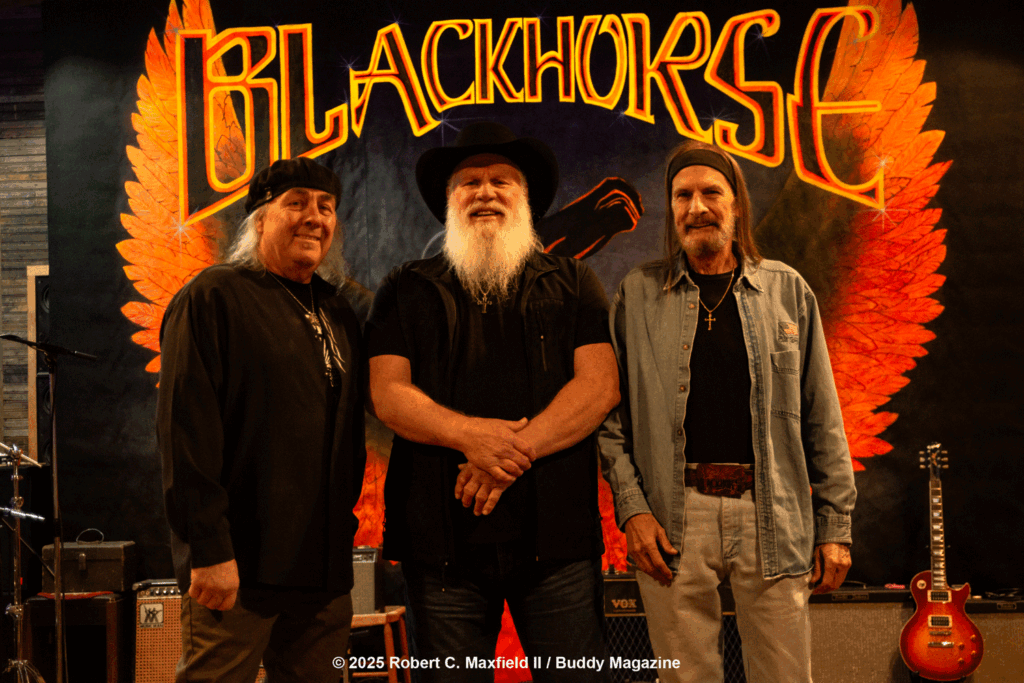
John Teague: Well, going by the book. It was their policy. As they brought that up, I went to management over it. Me and my road manager, Les Walker, both had cowboy hats. I wore a cowboy hat when we played. I said, so I can play on stage with a cowboy hat. And I can’t walk through the door on my night off. That policy got overturned. We shook hands all the way down to both bars downstairs. The stage was at the end at that time. I mean, that’s a long way to go saying “We’re glad you didn’t let them railroad you and all that stuff.” And the story got around. But nobody actually got banned. They tried to.
John Teague: But we overpowered their ass. I said, “If I can’t come in with a hat on, I’m not going to play a place that will let me play with a hat and not let me come in and drink beer and see my friends.”
Paul Pappy Middleton: And my first gig with the band was Spencer’s Corner. On a Friday, and set up sound checks and everything. And I mean, literally my first gig with the band. And we had rehearsed a couple of weeks. With three singers in the band now we kind of handed off different songs to each other that, you know, “I think you sounded better on this one than I do on that one.” “And I’ll get a rest here, you get a rest there or whatever.” John had booked Spencer’s Corner and the crowds were jam packed all the way up against the stage, standing up, and me and John are standing out there.
The stage lights were off and we’re looking at the audience and it was all TCU student rich kids, girls looking for a husband, and guys looking to get laid.
What this band meant to me when I met John and Gary was the fulfillment of the biggest, hardest thing for any musician who plays in bands in finding that magical thing. You know, you got it. And I heard them and got to jam with them that night. And then all of a sudden, you know, we’re ready to play our first gig and we get in there and we look around. Me and John are sitting there going, “Man, I’m getting that old sinking feeling.” What I felt when I met these guys, I was looking for a brotherly family band like the Allman Brothers. That was one of the first albums I heard when I came home.
Buddy Magazine: What year was this? ‘73?
John Teague: ‘74.
Paul Pappy Middleton: Yeah, it was my first gig. And so we got up there and we looked and looked like this and we just sat there. We looked at it and we just decided, ‘nah.’ We packed our stuff, went out the side door and didn’t play a lick. And I went home that night and it was just like this personal thing. You know, I didn’t even get to play my first gig. I went home and I wrote the song “Spencer’s Corner” that night. And it was the first time I’d ever written a song on my bass.
Calls John back the next week and says, “Man, I know you guys can do it. I’m on your side.” So he booked us the very next weekend. Okay. And so we went back. This time we get in there and we’re standing up on the stage. We’re looking out there, and me and John look at each other. And Gary’s over there kind of doing the same with his guitar, getting ready to get up there. And John and I got the same old feeling. We looked at each other and said, “it’s the same old sinking feeling.” Look at this crowd. And so this time we’re going to go tell Spencer that we just can’t do it. And the place was packed.
I’d been talking to Bill Simonson at Mother Blues for a couple of weeks to book us in. He wouldn’t even talk to me because we were a three-piece band. He said, “I’ve never had a three-piece band that could come in here and play seven nights in a row, four hours a night, and hold them.
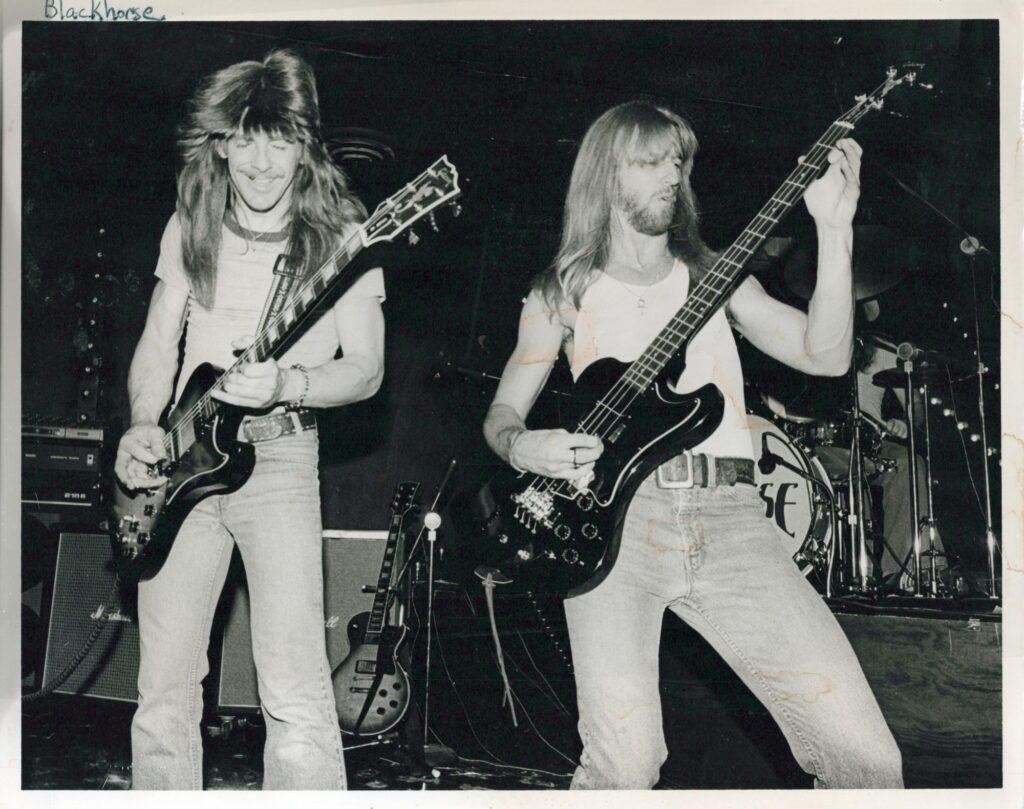
So we go ahead, you know, we do the gig and. Well, that’s what it was. Spencer calls me and he says, “I’ve heard you wrote a song about me.” I said, “Yeah. Oh, no disrespect, Spencer. It’s the audience. This is not our audience. We are here to write music and do it our way so that we can be happy people. If we never make a ton of money, we’re gonna love our life, you know. He appreciated that and everything. And when we came in and almost walked away, but did the gig and everything, they sold two full trucks of beer that night. And on Monday morning I get a call from Bill Simonson and Mother Blues saying, ‘hey, yo.’
Paul Pappy Middleton: Anheuser Busch came in and said, “Hey, did you hear about that band over in Fort Worth that sold two truckloads of beer? “ We set a record on beer sales.
John Teague: And Simonson changed his mind about three-piece bands. And from then on out, we were like the house band.
Paul Pappy Middleton: We were a house band at Mother Blues after two weeks.. From that point on, the word got around. I always considered it just a straight out. We did every kind of music in the world from [Mamas and the] Papas on some of the jam stuff. Gary knew a million songs. And the first night that I met him and got up and jammed with them. I said, “Well, what do you want to play? And John says, “You know ‘Give Me Shelter’.” And I went, ‘Yeah.’ I look over at Gary, ‘What key?’ And he goes, “You know, D. Okay, that’s the key. We played for about 40 minutes.
John Teague: And about seven, eight, 10 songs.
Paul Pappy Middleton: Yeah, he had hit that open D. John would just keep going. And so I just followed John and just kind of did a driving thing. When we got to the chorus line where the girl singer on the Stones record was up there. “Children.” Yep, I did that. And I looked over, you know, as we were singing all that three-part harmony, and I looked over at Gary [James]. Gary’s on the side of his mic looking back at John, and he sings, too.
John Teague: But that’s the kind of stuff we did whenever there was the magic that we had when we co-founded the band with Frank and myself. The ability to go from one song into the other. I mean, he’d go from, you know, Buffalo Springfield, Bluebird to America by Steppenwolf. I mean, he would flow in and out of them and then just knew how to tie them all together. And the crowd loved it.
Paul Pappy Middleton: What were yalls’ favorite albums that were made in 1979? We were number five and ZZ Top was number six [refers to UK Rock Candy Magazine readers poll of Best Hard Rock Albums of 1979].
John Teague: That just came out, like, yesterday.
Buddy Magazine: Do you talk to fans in Europe and abroad? What’s your reaction to that kind of thing in Europe and abroad towards the band here?
Donnie Pendleton: It’s just like Pantera.
Paul Pappy Middleton: Yeah.
Buddy Magazine: It’s like you’re here, it’s your hometown. Right. But what does that outside reaction feel like to you guys?
John Teague: Well, we’re being bootlegged in Germany as we speak. We bought a CD from over there for 25 bucks when we hadn’t even done CDs. All we had was wax. I know, because I bought three of the damn things and gave them to the guys in the band. And we were commenting on how good the artwork was and how, you know, they had to do another master.
Paul Pappy Middleton: Really good.
John Teague: They had to do another master to do the CD back then. And so they did that. We didn’t see a dime out of it.
Paul Pappy Middleton: So. I was on tour with Chris Isaak. And the first thing we did is go to Europe to do the European leg first. And we get over there and we’re playing big festivals. Any of the big festivals over there always have a gigantic circus tent where all the bootlegs are sold. They let everybody bootleg all they want, but because they don’t want to waste your police time on an artist whose music’s, in essence, being stolen.
But at the same time, they look at it going, “Hey, if you sell 10,000 bootleg records, that’s just helping your career. That’s where I came across a bootleg Blackhorse album over there. Was on tour with Chris. There was a band in the UK, a Blackhorse band, playing our music in the UK. There was one in France and one in Germany.
Buddy Magazine: Did you sell records at your gigs? I read somewhere that in the early days you would do this. When did the album come out?
John Teague: It came out in ‘79. When we played Zoo World in 1980, we sold 400 records out of the back of the truck.
Paul Pappy Middleton: Yeah, and we also had a booth. That’s where we released the record. Zoo World (KZEW). I also played both nights, Friday night and Saturday night. And we’re the only band that ever played the whole Zoo World. There was always a headliner on a Friday night and another band on Saturday night.
And when I was on tour with Point Blank over there, we were in Denmark, way out in the boonies in a place that hippies had taken over. It was like an old mine that went dry. And the club owner comes out and he goes up to Rusty.
He says, ‘“Do you know of a band named Blackhorse?” And I could hear him talking to Rusty [Burns]. And Rusty looks back at me. “Yeah, yeah, I know those guys.” He says, “How could we book Blackhorse over here?” And he says, “Well, you might go ask the bass player. He’s our sound guy, you know. And the guy turns around, looks at me, he runs right by me, goes around behind me and goes in a door which happens to be his office. And he comes out with our album with our autographs on it.
John Teague: Wow.
Paul Pappy Middleton: And he paid, you know, roughly, like $75 for it and was just flipping out. And Gary found this out. He brought me a stack of stuff printed up off the computer, where he was, you know, Blackhorse this and Blackhorse that and everything. And the only distributor that had our record was in New Zealand. And I don’t know where they got what they were selling, but they were selling our albums.
I built this place [Palmyra Studios] for three reasons.
John Teague: Second Blackhorse album, which is done right in there. All it’s got to do is be pressed and distributed. We’re also doing a project ourselves at Sessionworks Studio with Jeff Mount that we plan to get back to soon.
Donnie Pendleton: As soon as this album is released, we’re actually doing some writing.
John Teague: And we’ve already recorded a couple of songs a few years back that are going to be a part of this. They really hadn’t actually been released. They’ve been teased, but that’s about it.
Buddy Magazine: What’s the approach towards that one?
Donnie Pendleton: Loud and Proud.
John Teague: Loud and Proud. The songs we’ve written are in the Blackhorse vein.
We’ve taken a cover song that was the flip side of “Ride Captain Ride” back in the day. And it’s called “Pay My Dues” by the same band, Blues Image. But it was an obscure side B. And we took it years ago and did our own version of it. We kind of resurrected that and laid it down on tape and it came out sounding like Blackhorse.
Donnie Pendleton: Yeah, sounds true.
John Teague: So it’s also in the mix and we’ve written some since then. So,you know, like Donnie said it is here shortly. We’ll be picking back up on that. We’re past the mastering stage on the double album. The Blackhorse 2 Family and Friends album.
Paul Pappy Middleton: The Legacy album.
John Teague: It’s Blackhorse 2. Legacy: Family and Friends.
Paul Pappy Middleton: And we’ve got the live stuff. John got cassette tapes from Melinda, Gary’s widow. I had stuff that we rehearsed here a lot of different times.
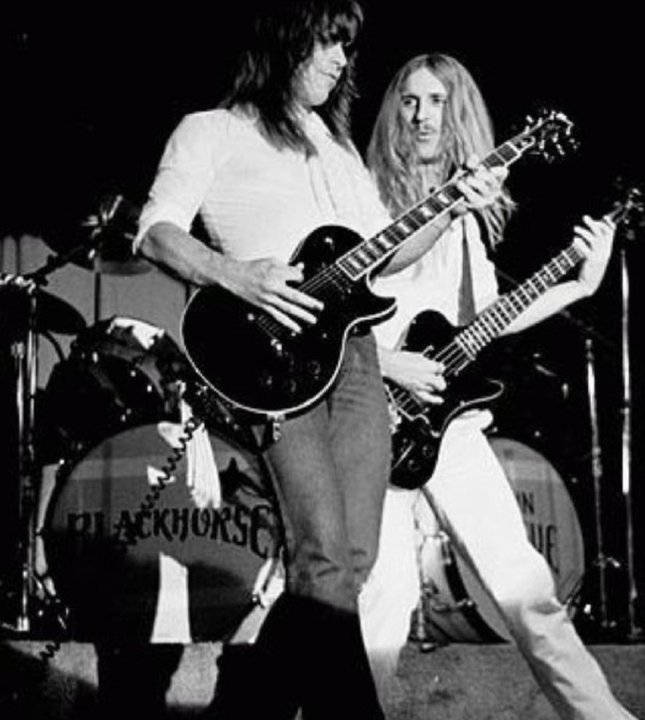
John Teague: We dug the archives of Blackhorse. And we got Rusty Burns and Gary James, playing together at the ranch up in Muenster, Texas.
Paul Pappy Middleton: And they never played together on stage. And we got a cassette of it and it’s eight minutes long. And Rusty and Gary are just tearing it up.
John Teague: We got two songs of John O’Daniel singing our music and a cover of “I’ve Been Loving You Too Long” by Otis Redding. And we did it out at Buford Studio, where Paul started his career, once he left the band. But anyway, there’s two songs sung by him and he just sings “I Don’t Need To Tell You” about John.
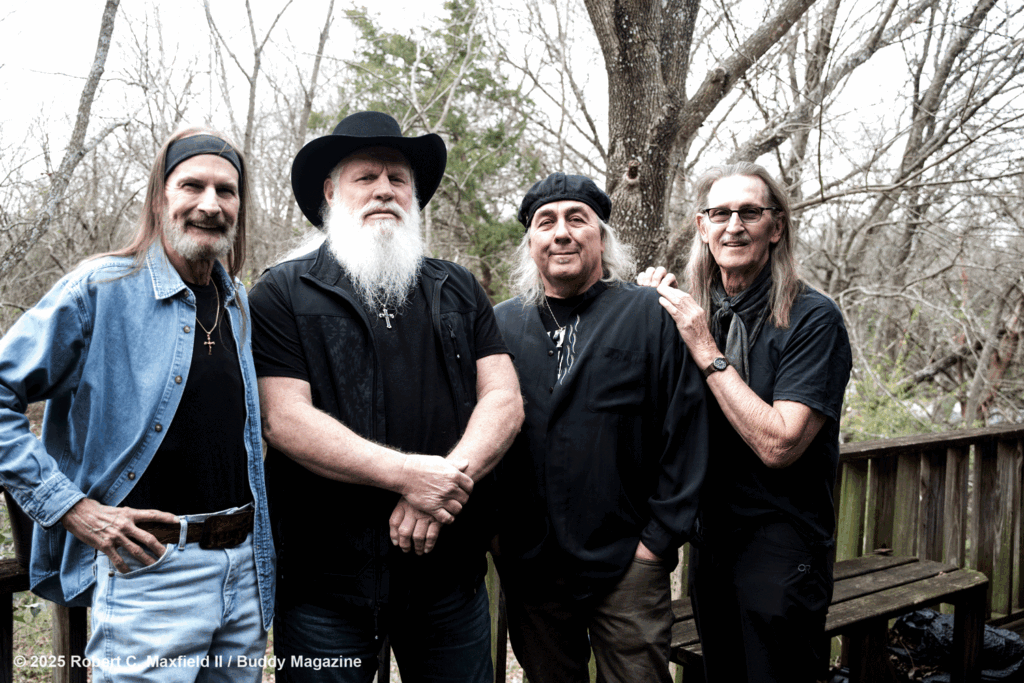
We’ve got Buddy Whittington on there. We’ve got Mark Ballew. We’ve got Mike Mikeska, who was a drummer for Johnny D and Rocket 88s. I mean, we’ve got all of these people on this thing. Hence Blackhorse Legacy, Family and Friends.
Buddy Magazine: Awesome. Looking forward to hearing it.
—
—


