Undoubtedly, one of the biggest highlights of the Heavy Metal Hall of Fame in Arlington is the experiences and stories told by Jerry Warden. Warden has been part of North Texas’s heavy music landscape for more than four decades – first as a working musician and later as an organizer, historian, and advocate for the scene he helped shape. Long before he started the Heavy Metal Hall of Fame in Arlington, Warden was also the frontman of Warlock, a Dallas–Fort Worth heavy metal band that emerged during the surge of regional hard rock and metal activity in the 1980s.
The group built a performance style that aligned with the period’s broader Texas metal movement, which also saw the rise of bands such as Pantera, Rigor Mortis, and Gammacide. While Warlock did not achieve national breakout status, the band remained firmly woven into the DFW circuit, sharing stages with contemporaries, recording material that circulated among collectors, and contributing to a local ecosystem that produced several nationally recognized acts.
Some of this journey is documented in the 2015 film on the band “Rigor Mortis, Welcome to Your Funeral”.
As the decades progressed, Jerry Warden transitioned from performer to curator. His founding of the Heavy Metal Hall of Fame in Arlington set out to document and preserve the stories of the musicians, promoters, sound engineers, club owners, radio personalities, and other contributors who collectively defined heavy metal’s footprint in Texas.
Warden’s approach was to establish a permanent space for recognition, aiming to ensure that the contributions of Texas metal artists are neither overlooked nor lost to time. His work also reflects a broader trend in DFW: a growing acknowledgment that the region’s role in American heavy music is deeper and more expansive than many might assume. Bands that once played at small local venues now have international followings, and collectors worldwide seek recordings, memorabilia, and artifacts that trace the evolution of Texas metal from its earliest club days to present-day festival culture.
In the conversation that follows, Jerry Warden discusses his experiences as a musician, the origins of the Hall, and the importance of documenting a scene that was often built on grassroots effort rather than commercial infrastructure.
https://www.star-telegram.com/news/local/arlington/article312434961.html
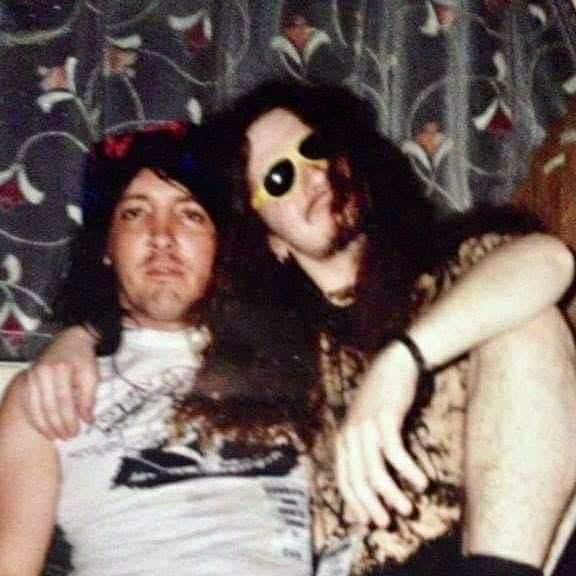
We began by chatting about the origins of Dimebag Darrell’s guitar, “Dean From Hell.” After winning the guitar in a Buddy/Q102/Arnold and Morgan guitar contest in the early 1980s, Darrell sold or traded it to Chris Westbrook.
Buddy Magazine: So, talk about how Dime ended up re-acquiring the Dean From Hell.
Jerry Warden: [Darrell] made some sort of deal with Chris Westbrook. And Chris Westbrook was jamming in the band with Buddy [Blaze].
Buddy Magazine: Chris Westbrook and Buddy Blaze were in the same band at that time?
Jerry Warden: Yeah, they were in the same band. Somehow, Buddy made a deal with Westbrook for that guitar. And then Buddy painted it that blue, and the lightning strike, Lightning bolts in it. He went over to Darrell’s house one time to show it to him. He wasn’t going over there trying to give it to him, sell it to him, or anything. He just wanted to show, like “Hey, remember that guitar you gave to Westbrook, man? Here’s what I did with it.” And he went over, he did that, and Darrell wouldn’t let him leave. He’s like, “No, man, I gotta have that.” Buddy’s like, “No, man, I didn’t come over here to sell it to you. I just want to show you what I did with it.” To what extent Darrell went to, how much money he pulled out of his wallet or whatever it was, he wouldn’t let Buddy leave with that guitar, man. He had to have it.
Buddy Magazine: How old was Darrell at that time?
Jerry Warden: About 14, right there. Darrell was born in ‘66, so, you know, it had been all the way to ‘86 when he turned 20. He had done a lot by ‘86. A lot of people, man, think that Buddy [Blaze] got famous because of Darrell’s guitar, but that’s not true. He was a builder. I knew him before he even started. His name is Buddy Webster. I knew his brother, Pyro. It’s always funny, too, because Pyro always tells everybody that Darrell gave him the name Pyro. I gave him the name Pyro. I tell Pyro when I see him, you know, “Pyro, it’s all right, bro. I know it sounds so much better when you tell them that Darrell gave you that name. So, keep on doing it, baby.” Uncommon name, Pyro, so they called him Pyro.
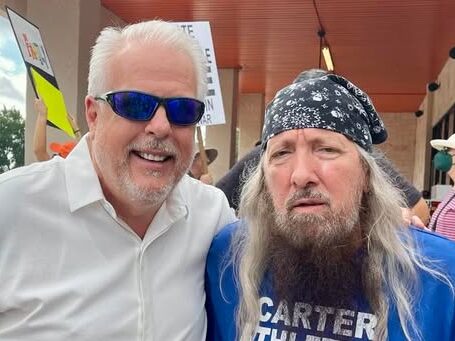
Buddy Magazine: What made you want to start this museum?
Jerry Warden: Well, way back then, 2010, you just keep thinking that “man, you know, this Rock and Roll Hall of Fame, ain’t representing us, man.” They ain’t. They don’t give a flip about us. Took them forever to finally induct Black Sabbath. They never truly did Judas Priest right. It wasn’t like a true induction. It’s like we’re adding it for your song. And then, you know, Iron Maiden, you know, got shot down. One – they were on the ballot year before last.
And so, it’s just the culmination of – it starts with your love of heavy metal. I was a hard rocker in the 70s, and then finally by ‘78 or ‘79, we learned the word “heavy metal”. That what we were actually listening to was called “heavy metal”. You know, not hard rock. [Then] a new wave of British heavy metal hit, ‘79, ‘80. I was all over that, man. I had the first Iron Maiden album when it was only the Iron Maiden album. Saxon, you know, denim and leather, man, even Def Leppard, I tell people all the time, look at that rare Def Leppard poster we got right there. High & Dry, man. It was. It is battered too. It is really beat up, man. But that was the original promo from High & Dry.
And seeing that the Rock and Roll Hall of Fame just didn’t give a hoot about us, you know. And we deserve our own place. We’re transitioning now to a non-profit organization. The Rock and Roll Hall of Fame are a non-profit organization. It takes you some time to learn that you can actually still have retail. I mean, they sell food there, they sell liquor, they sell, of course, merchandise, memorabilia, everything under the sun. But they’re still a non-profit organization. That took me a long time to understand that you could do that, you know.
Buddy Magazine: So, it is no coincidence this museum is in Arlington? Is this a Texas Metal Museum or international?
Jerry Warden: International, in my opinion. I want to be like the Heavy Metal Hall of Fame. I know that’s a big undertaking, but I can also understand and respect that question. It’s just a local hall of fame, Texas Regional. But no, we want the world, man. It started right here.
When I look at the beginning, I look at 79, I look at ‘80, I look at ‘81. Then ‘82 is when I started Heavy Meadows. We could never get any gigs, man. So, I had this cool outdoor place called Heavy Meadows. My friend married this lady who lived down there in a little town called Webb. But now, it’s just incorporated into Arlington. It’s just South Arlington now.
We did it for two years, ‘82 and ‘83. And it was big. I built a 550-square-foot stage. Everybody from those times played there. Pantera played there. That’s the only thing of mine that made the VH1 Behind the Music episode. A flyer from Heavy Meadows. Says something along the line like Pantera started out playing backyard parties, keg parties. Bam, they flashed that flyer.
And then finally this lady, man, who was a mother of two friends of mine, two twins, Johnny and Jimmy Cornuaud. They owned this old club right here called Rascals. And they let me come there in May of ‘85.
There were a lot of reasons I was doing those things. Just for a place to play. We just don’t count places like Matley’s, and the Ritz, those weren’t metal clubs. They were rock clubs.
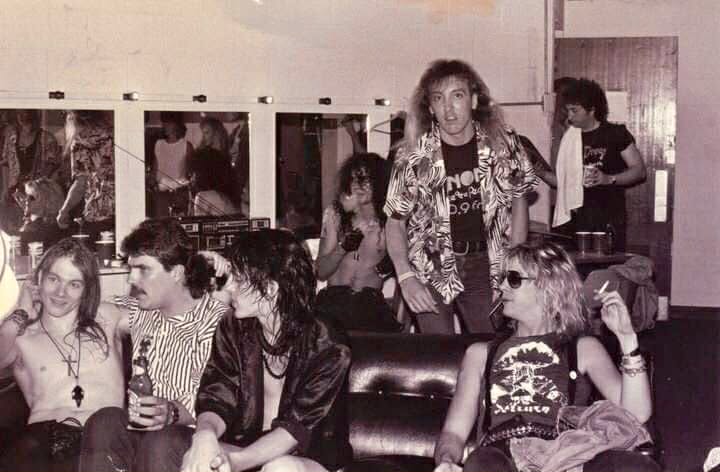
We’ve always gone back and forth on that. Back in those years, Sweet Savage and those bands like that, they weren’t metal bands. They were rock bands. You know, they were just ‘80s rock, and there’s nothing wrong with that.
I became friends with Joey in the later years. But we played a gig with them one time. It was complete insanity. That one right there was Jam Fest 5. Right there [refers to poster of the gig on the wall], you see that Warlock and Sweet Savage and Rotting Corpse and on the right Hammer Witch, that blue one right there. And you see that we’re headlining there over Sweet Savage. And they didn’t like that. So, they come in and they big-timed us, bro. They got up there and went and told Rick Miller, who owned the place, “Hey, man, who are these Warlock dudes, man? We ain’t opening for these dudes!”
They learned all about metal that day. Because they forced us to play in front of them. They’re like, “no, we’re not gonna open for them. They gotta play in front of us.” And that didn’t work out well for them, man. You know, we got up there and told them, man, [these guys] are too good to play in front of us. Let’s get it on, man. The mosh pit chairs flying everywhere, tables everywhere, man. I later talked to Joey about that.
“You remember that one time you played that gig with us, man? Y’ all thought y’ all were too cool for it, right? You read those guys, man. They threw stuff at me, man. They wanted to fight, man. Yeah, we wanted to fight.
Buddy Magazine: So here with the museum, you definitely draw the line on the heavier side.
Jerry Warden: I still had the Def Leppard up. I had the Poison poster over there. But I don’t consider that metal, and I don’t consider that an insult to those bands. They wrote good rock songs. Cinderella, they wrote. But do you think if you went to Cinderella today, and asked, “Are you guys a rock band or a metal band?” What are they gonna say? “We’re a rock band.”
Buddy Magazine: There’s definitely more of a hard rock side of things, maybe with the metal aesthetic.
Jerry Warden: Poison came out with their first album in ‘85, and Exodus came out with their first album in ‘85. They’re quite different. You know, Exodus is metal, and they’re rocking.
Buddy Magazine: Are you hosting any black metal bands here in town? Obviously, that’s a Norwegian thing.
Jerry Warden: So, we got some black here, man. Yeah, we did. We did some black shows. You know, there’s not too many of them around anymore. Seems like it’s faded out. I did several of them, though, man.
Buddy Magazine: -Who are some other black metal bands locally that come to mind, or other branches?
Jerry Warden: In addition to Absu, I’ll throw the Black Moriah in there, man. They’re pretty good. And Alapeno – Al Ward, and his band Maistas. His last name is Ward. He had a brother named Dave. And he was a guitar player in black metal bands all the time. Also, Sparrows.
Buddy Magazine: So, who are some of the bands you like a lot now? Who are your favorites?
Jerry Warden: I love a lot of these young bands, man. I’m not stuck. I mean, Slayer, definitely my favorite band of the 80s. They were different and unapologetically so. A lot of true guitar players didn’t even think they played right. But guess what? They were just doing something different, you know? They finally learned that now, but now the modern day stuff? You know, man, locally, I do love Fugitive. I do love anything Blake does, you know? Of course, Power Trip. I love Lorna Shore. Knocked Loose is really cool. Also, Chris Zativah from the band Zativah Kid & Zativah Studios.
Buddy Magazine: So, as far as building the museum, are you taking donations? Is there a way they can get stuff to you and make donations, or how do you work all that?
Jerry Warden: Well, you know, of course, anybody could donate anything. God, the things that people donate. This guy just gave me a $3,000 PA today. So, I mean the donations that people have given me. Walter, of course, has helped me tremendously. Man Rotting Corpse, of course, it’s just like [donating] by them playing here.
Buddy Magazine: Any types of things you’re looking for in particular [donations]?
Jerry Warden: Donations of guitars, anything metal, man, you know. Obviously, shirts, posters, anything. I mean, somebody just gave us that Ace poster last week. But there’s going to come a time when we’ll have something on the website where you can donate money to us. But that’ll be after the IRS grants us 501C3 designation.
So, these people are giving me hard time, man. It’s not been easy for me to learn to do because it’s contrary to – you go out and you work for something, you make some bread, man, or however you do it, then you go buy it, man, legitimately.
Buddy Magazine: Talk about your early contributions to creating and fostering a heavy metal scene in the North Texas area.
Jerry Warden: We had Heavy Meadows, 82, ‘83, Rascals, ‘85, ‘86, Tombstone, Factory, ‘86 through ‘87. I started booking Joe’s Garage in ‘87 and brought the metal scene out there.
And then I did the very first metal show on KNON. From 86 to 89. I even worked for Z Rock for a few months. About four or five months, and they fired me. But I was too radical back then, man. You know, I was still a little too crazy, but I did work there.
Buddy Magazine: The Rigor Mortis shows were some of the most dangerous and craziest shows I’ve ever been to. Can you talk about your background with them a little bit?
Jerry Warden: You know, they were in my band before they had Rigor Mortis.
Buddy Magazine: Yes, I believe that it was in the Rigor Mortis documentary.
Jerry Warden: This is ‘83, and I’m already the metal head to the fucking max, man.
Buddy Magazine: I recall in the documentary that Rigor got in a fight with Pantera, throwing pool balls.
Jerry Warden: It wasn’t really with Pantera. It was with the people at Savvy’s. We just had so much frustration built up over the years because they wouldn’t ever let us play there, man. If you were Sweet Savage or somebody like that. But us? No, man, no.
The Ritz would never let us play there either. But they started something called Heavy Metal Wednesdays. Do you remember that?
Buddy Magazine: Vaguely, yes. I would have seen it in the pages of the magazines.
Jerry Warden: They gave us the second Heavy Metal Wednesday, so we are all happy. Finally, I got to play at the Ritz. Yay. Then, wouldn’t you know, man, the Metallica tour comes to Dallas on that night. Same night, same Wednesday. At the Arcadia. It was Metallica and Armored Saint. And of course, we didn’t get to go. We had to play. But Rita [Haney] told us, ‘Hey, I’m gonna go over and see the Metallica concert.
Evidently, she met them that night and told me they’re coming back to hang out and party with us, man. And we want to take them up to Rascals. The good news is we’re fixing to jam with Metallica, bro.
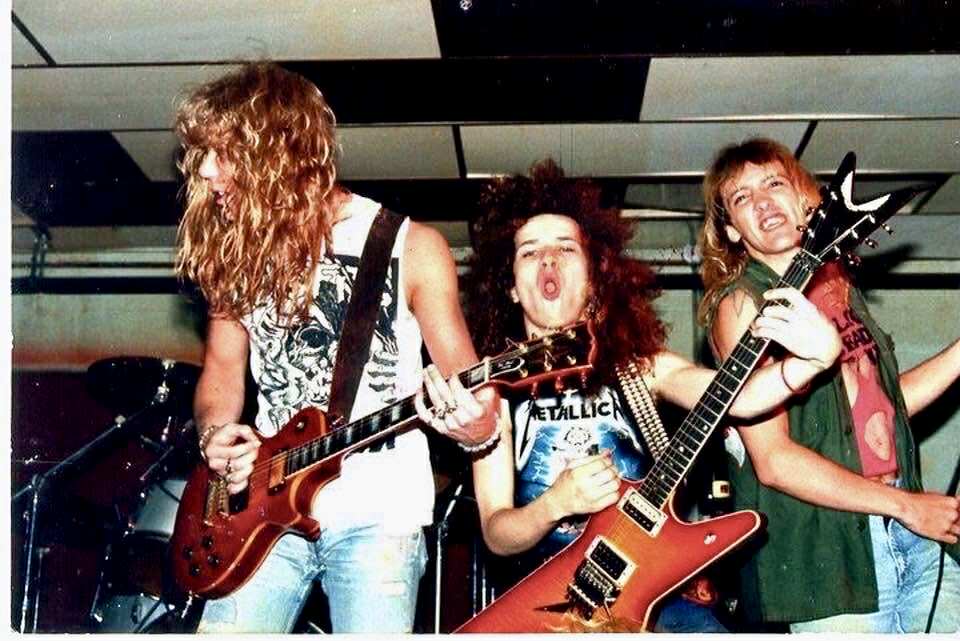
Buddy Magazine: So, you got to jam with Metallica?
Jerry Warden: Yeah, twice. And Rita said, “We’re gonna go out to Savvy’s”. I’m like, all right, man. And she said, ‘I invited the Pantera guys to come, too’. We were just throw-ins – Me and the Pantera dudes.
It was with James and Lars. The [Ride the Lightning] tour is over. They just finished the tour, and then they came back to hang. So now we’re up here, Savvy’s. Terry [Glaze, Pantera vocalist] didn’t come, so it’s just Rex, Vince, Darrell, me, James, Lars, Rita, and Lanise. Nobody ever knew it was Metallica. Nobody ever came up to us.
As a matter of fact, this is the greatest part of the story. And so here at Savvy’s, toward the end of the night, Darrell goes over there to talk to Rick Miller [Savvy’s club owner]. He was the owner of the place and the drummer of Savvy [house band]. He and his dad owned it. And we asked him, ‘Could we play’? You know, “hey, man, we got the dudes from Metallica over here, man. Can we get up and jam? And he’s like, “man, I told you, man, I don’t want that metal here, man. I keep trying to tell you, I don’t want that heavy metal in my club.
We’re sitting here going, ‘dude, it’s Metallica, man. Come on, man. And he’s like, “I’ll tell you what. You tell him to give me a tape, and I’ll listen to it, and if I like it, I’ll give my fair shot. I’ll book him.”
And so we had to turn around, come back to the table, and he said, “no”, man. He ain’t gonna let us jam. He goes backstage, though, back there talking to Ricky Lynn [Gregg] and tells them, “hey, man, those metalhead dudes are out here”. They had already played three sets. Back then, you had to play three or four sets a night, right?
And that’s the other reason that we end up doing what we do. Because we wanted to play our own show, original stuff. And that was the reason for Heavy Meadows. That was the reason for Rascals. That was the reason for the Tombstone Factory. That was the reason for Joe’s Garage, man, so we could do that. He hated heavy metal out there at Joe’s, man. Before I went out there, I handed the whole scene to a Lebanese man who hated heavy metal. It’s crazy. “I would never have that heavy metal in my club. I can’t stand that heavy metal.”
Okay, man, whatever. We are going back. So, he goes in there and tells him that. And they’re like, “Oh, yeah, man, let him play, man. Let him play.” They [Savvy] wanted to get out of there. That was their reason. Like, yeah, let them guys play’. That’s the only way we got the jam, because Savvy was gonna leave early. Ricky Lynn and all of them were gonna leave early. So, then he comes back, “Well, I mentioned it to the guys, you know, they said they were ready to go home. So, they said y’ all could have that last set.”
Buddy Magazine: What songs did y’all play?
Jerry Warden: I sang “Seek and Destroy” and “For Whom the Bells Tolls”. That’s all I sing. But they played a bunch more songs – Iron Maiden, Metallica.
Buddy Magazine: : Okay, this is a time when Metallica…
Jerry Warden: They just finished Ride the Lightning. They were about to start working on that masterpiece [Master of Puppets] and you know, all the rest of Ozzy’s tour and all that was still to come, right? But yeah, so we got up there and got to jam. It wasn’t that big a deal. But we left and went to Darrell’s house, and we stayed there all night. I remember leaving at 8 or 9 in the morning daylight.
So, Rita tells me, “Well, we’re gonna do it again tonight. We’re gonna go back out to Savvy’s”. Now it’s Wednesday night. I ended up telling my bass player, Eric Roy, “man, guess what I did last night, man? Yeah, with Metallica”. He said, “Oh no, you didn’t”. I said, “Yeah, I did!” We’re doing it again. Come on, let’s go. So, I took him out there. He was shell-shocked. And man, we pulled up in that parking lot.
You remember that parking lot to Savvy’s, man? Pretty big old parking lot, and it was packed. The line was out the f****ing door. And one day they heard, got out in one day. The line was all right [around the building], man. But I went ahead and parked and went on up the door. Darrell jammed. And Rex jammed.
Buddy Magazine: Rex played all the bass that night.
Jerry Warden: Yeah, Rex and Darrell played. They played the whole thing with James. I only just got up to sing a couple of songs. Vince never got up there one time. And he sat at that table the whole time. But, man, we got in there, man, they have us sitting at the same table. But there was a long line of people with their albums and all this. Rick Miller, the owner, said, “Can I get you guys anything? Y’ all ready to play?” He told the other guys they ain’t playing tonight.
Buddy Magazine: And then he went metal after that?
Jerry Warden: I would imagine the last year or so. Yeah, he did metal. Did you ever hear about the cage he put in there? It was at the front side, where the stage was, man was only where adults were, and the back side was for minors. He wouldn’t let the minors in with the adults.
Buddy Magazine: Did Dime and Vinnie eventually buy the club [Savvy’s]?
Jerry Warden: No. They had the Tattoo bar. [Darrell] You could not-not have a good time around that kid, man. He was just like that. He only had one job ever in his life. He knew what he was going to do. He worked at Captain D’s, over there on 303. He had to wear one of them cardboard hats on his fluffy ass hair. Only place he ever worked.
Buddy Magazine: When you talk about influences on a career, Captain D’s probably had as big of influence on Darrell to become a musician as much as anything. He knew he didn’t want to do that.
Jerry Warden: Yeah. That little fucker. He would tell them in school, man, that, “hey, man, I don’t need this, man.”
Buddy Magazine: He dropped out. What, 9th or 10th grade?
Jerry Warden: No, no, he made up to about 11th. The rest of them all graduated. Terry, Vince, and Rex all graduated from Bowie. But Darrell ended up having to go to Arlington High. He’s a character, man, that dude – no human being ever like him. I mean, some people are on sometimes, some people just ain’t on sometimes. I’m on sometimes, I’m clicking and telling those great stories; and sometimes I’m just the guy in the corner over there, man. Man, Darrell never was the guy in the corner. He was always on, 24/7.
Buddy Magazine: He spoke his own language, too.
Jerry Warden: Magic 24 /7, man. Just. Wow. Special human being, man, that guy. Yep. And anybody that was ever around him knew it too well.
Buddy Magazine: What would you like people reading this article to know about the Texas Heavy Metal Museum the most?
Jerry Warden: That we are a national and international entity, and we’re not just the Texas or Regional Heavy Metal Museum. I’m not trying to add big or anything. We don’t want there just to be a Hall of Fame in every region. You know that San Antonio has a great metal history. They could have their own museum, you know, New York City, Louisiana. Frisco, Tampa. Great Tampa. Death Scene that came out of there in the early 90s. They could have their own museum there and everything. You know, but we need one for the world, man, so we’re gonna shoot for them stars. We’re gonna shoot for them dumb stars.
Buddy Magazine: Awesome, man. I wish you all the success, truly.
Jerry Warden: Thank you so much.