


By Lee Zimmerman
It’s hard to imagine where the trajectory of modern music would take us had the recordings of the past not be provided in the form of physical records. How would a Sgt Pepper or a Tommy or a Beggars Banquet have fared without the visual stimuli that accompanied them. What would the impact of those early albums by Elvis, Little Richard or Chuck Berry have been without the imagery that accompanied them.
They simply would have been anonymous artists — albeit artists making new and revolutionary music — but much of the impact would have been diminished.
Nowadays, those lessons have been lost on a new generation of artists prone to streaming, virtual singles and the absence of real albums. Sadly, there are those that insist the era of physical music is over, that no one wants them anymore and people only want to listen on phones or bluetooth devices. The industry has helped accommodate that mentality by taking CD players out of cars and computers and servicing new releases through streams and downloads only.
“Nobody wants physical music anymore,” the pundits insist while insinuating that only old folks want the actual discs.
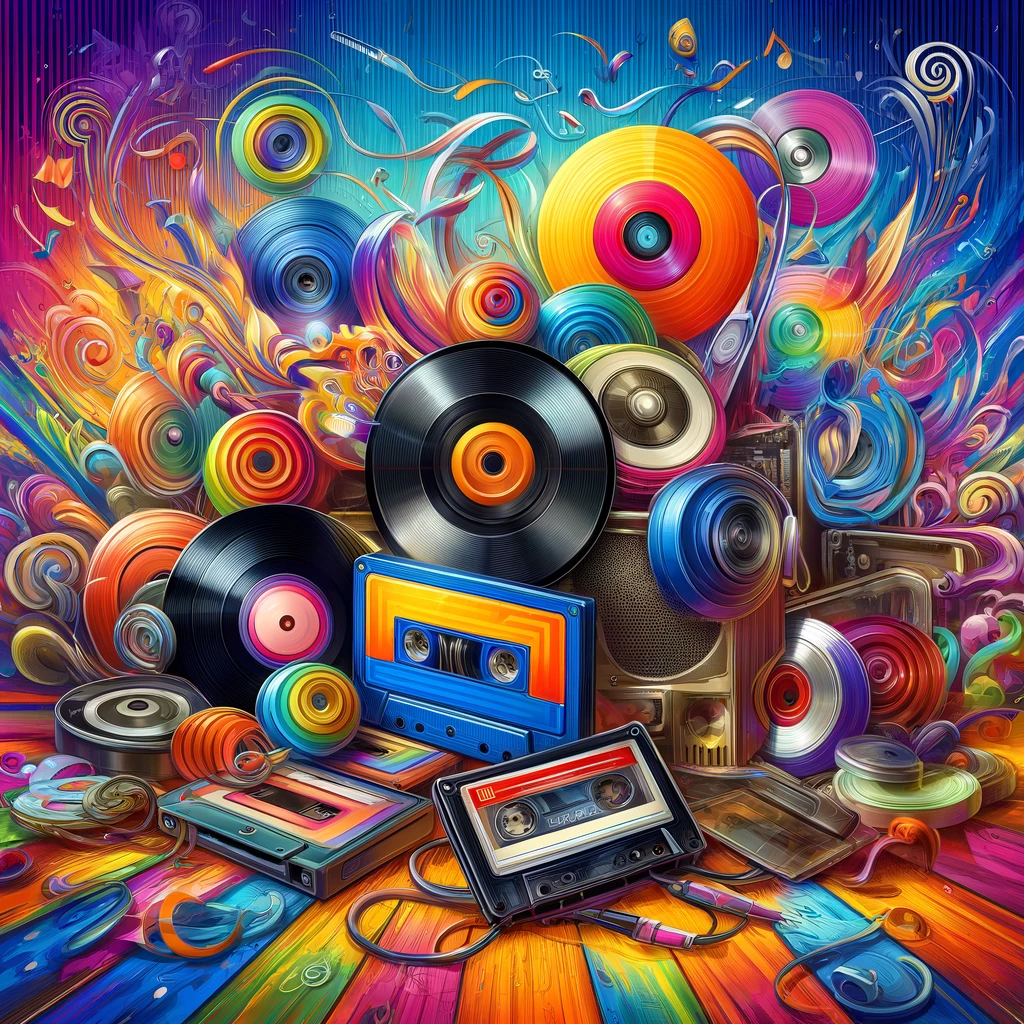
Of course, that’s a form of ageism and a putdown of those with traditional values as far as enjoying music is concerned. There was once a time when a new album offered as much anticipation for its artwork, liner notes and credits as it did for the music that was wrapped up inside. People would get together, discuss every detail of the album design and spend hours looking over the lyrics and coming up with their own interpretations of the messages the musicians attempted to convey. It was a group experience — a communal exercise — that brought people together by comparing their observations and offering their thoughts as to how the art contributed to the album.
Nowadays, that experience is all but lost. The music exists only in the ether, without any connection to physical formatting. One has to wonder how that helps the life and longevity when those sounds simply exist in the ether, without the ability to touch or grasp or put it on a shelf while curating a collection. It serves to make the music merely temporary, a fleeting encounter that’s listened to only a limited number of times before being quickly displaced by some other ethereal offering.
Personally, I’m proud of my music collection. I’m fortunate enough to have three rooms to my basement stacked floor to ceiling with vinyl, CDs and all sorts of memorabilia. I consider it all a keepsake that represent my musical memories — signposts of my life in a very real and tangible way. When those moments aren’t allowed to linger, what becomes the connection to that lvoe and obsession?
Yes — it could be considered an obsession in my case — but it’s also a hobby. It satisfies the soul, brings a focus, and makes it all real. That certainly can’t be said for something that lacks a physical connection. After all, would a hobbies who collects coins or art or anything else among to maintain any interest if in fact there was no collection involved. How would it work? Is the acquuisition of physical music any different?
Granted, some folks would argue that a single drive can hold thousands more albums than any single shelf. That may be true, but there again, the visual stimuli is simply lacking. As human beings, we are given several senses. Why limit the experience to one without the benefit of another?
It’s like hiking to a waterfall and putting in earplugs so as to deter the sound of rushing water. Why deny a second sense? That in itself makes no sense.
There are also certain naysayers who look at a vast collection of physical music and say disparaging things, such as “what are you going to do with this when you die? It’s inconsiderate to your heirs that you are leaving this for them to handle.”
I suppose that means we should occupy ourselves with having pleasure in the present, and in turn, only look forward to the day of our demise.
As the Grassroots once said, “Sha la la all la, let’s live for today and don’t worry about tomorrow, hey, hey…”
There is something to be said for an old- fashioned adage after all.
When you get right down to it, the debate centers on the difference between collecting and passive listening. A collector wants a physical acquisition in hand. The fickle listener doesn’t care. The former is taking stock for the future, building a presence that can carry over into the future and stand the test of time. The fickle listens doesn’t care about past precepts or establishing a signpost for the future. That’s the difference.
Don’t get me wrong. I have no-problem with passive listening. But YouTube and Spotify don’t bring me the same satisfaction as having an album I can hold, keep and return to time and time again. Albums are a treasure, a complete package, and failing that, simply a temporary distraction and nothing more.
So here’s the message for artists, A&R people and record companies — keep the physical discs coming. You’re securing a template for the future and an accomplishment that lasts.
—


