


Sleigh Bells discuss Treats anniversary, “Bunky Pop” & RoMellow Williams memorial at Granada Theater
By: RoMellow Williams (RIP) and Ian Saint
May 24 marks the 16th anniversary of Sleigh Bells releasing Treats, one of 2010’s top acclaimed debut albums. A dazzling rollercoaster of grinding and glistening sounds, the indie-label release notched the Top 40 of Billboard’s Top 200 Albums chart — and that was 3 years before Apple licensed “Rill Rill” for their slick iPhone 5c commercial.
Last year, Sleigh Bells spent Treats’ 15th birthday performing at one of their favorite venues: the Granada Theater in Dallas, which they’d played six times previously. It was a mix of nostalgia and new for vocalist Alexis Krauss and instrumentalist Derek Miller, as they were touring behind new album Bunky Becky Birthday Boy. The album title alludes to the duality of grieving death amid new life, as Alexis became a mother shortly before losing her beloved dog Riz — who barked on the title track to Sleigh Bells’ third album, 2013’s Bitter Rivals. “Bunky Becky” was a nickname for Riz, and the “Birthday Boy” is her son Wilder.
At the Granada Theater show on Treats’ 15th birthday, Sleigh Bells also paid homage to a fallen fan, who discovered Treats in middle school and couldn’t wait to finally experience them in concert… Sadly, he joined the fabled 27 Club just 28 days before the Granada show — literally hours after RoMellow commented on Alexis’ Instagram, expressing his excitement to learn the choreography she’d posted for their new song “Badly.”
RoMellow DeWayne Williams was a rapper, poet, singer, dancer, writer, interviewer — anything creative, he loved, and probably excelled at. Making his earthly debut in 1997 at Baylor Hospital, next to Dallas’s Deep Ellum entertainment district, the very proud Leo was born to be a star. Those ambitions were sidelined at age 14 by a leukemia diagnosis. RoMellow spent 13 years being as bold, prolific, and adventurous as he could muster through the leukemia’s turbulence — right up until he unexpectedly died on April 26, 2025.
You can read RoMellow’s family obituary and my personal homage to him for more information on his life and spirit.

The last time I saw RoMellow, he was driving us home from Longhorn Ballroom’s “Punks & Pokes” show with Eleven Hundred Springs and Bowling For Soup. Sleigh Bells had just released “Wanna Start a Band?” as the new single for their upcoming album, and they also announced a tour. RoMellow was incredibly elated by the opportunity to finally see one of his favorite bands in concert, and I thought that perhaps we could work together on a potential Buddy Magazine interview with Sleigh Bells. To acquaint me with the band, RoMellow commenced a discography-spanning Sleigh Bells listening marathon; and I recorded a Voice Memo so that I could capture his commentary during their songs. This Voice Memo of our impromptu Sleigh Bells listening party inadvertently became the final footage of us together.
When RoMellow died, I felt crushed by a myriad of feelings — but the most chilling to process was knowing how many dreams he was determined to fulfill.
He wanted to become a father, a natural fit as he was so dutiful with his many younger siblings. After loving Costa Rica on his recent trip, he wanted to travel the world so much more. He wanted to write for this publication, Buddy Magazine. He’d recorded so much music that hasn’t been released. Lord, he even missed his first Sleigh Bells show by four weeks! When I think about how much passion and ambition he effused, and how his earthly glow was suddenly snuffed at 27 years old, the grief can feel paralyzing.
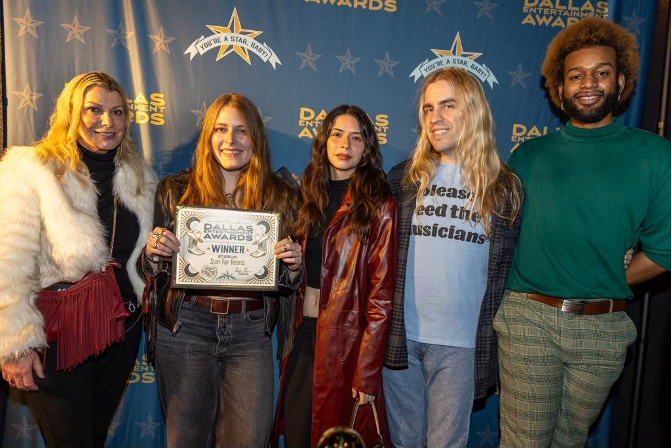
As Sleigh Bells’ Granada show loomed, I transformed my distraught spirit into determination. Five days prior, I reached out to the band’s manager, to see if they were open to commemorating RoMellow in some way. Their response took my breath away, and speaks to how gracious they are towards their fans.
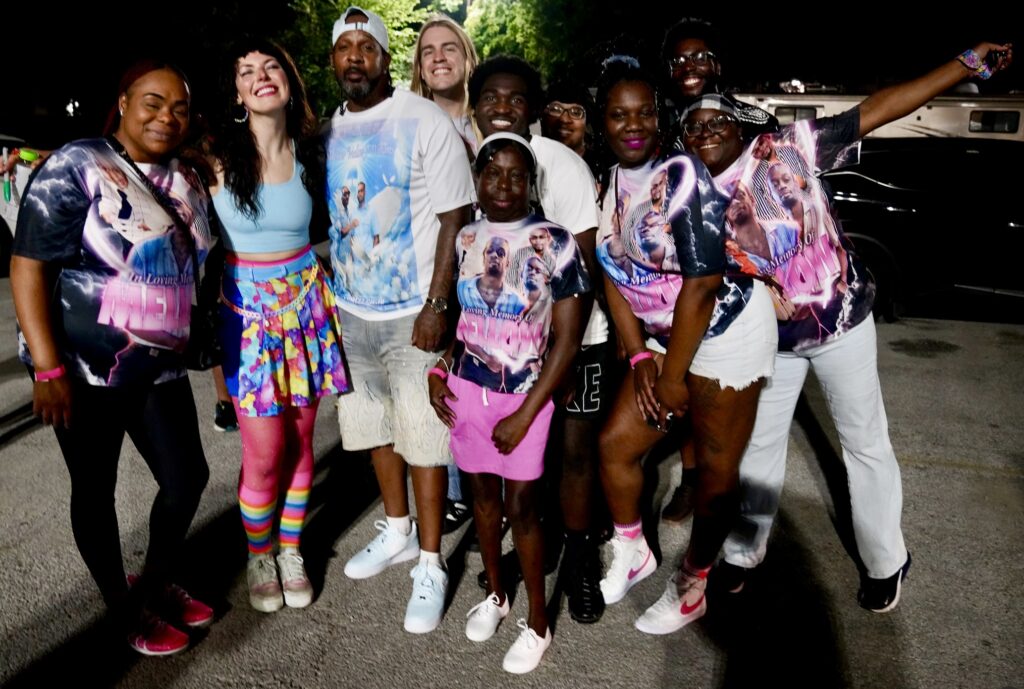
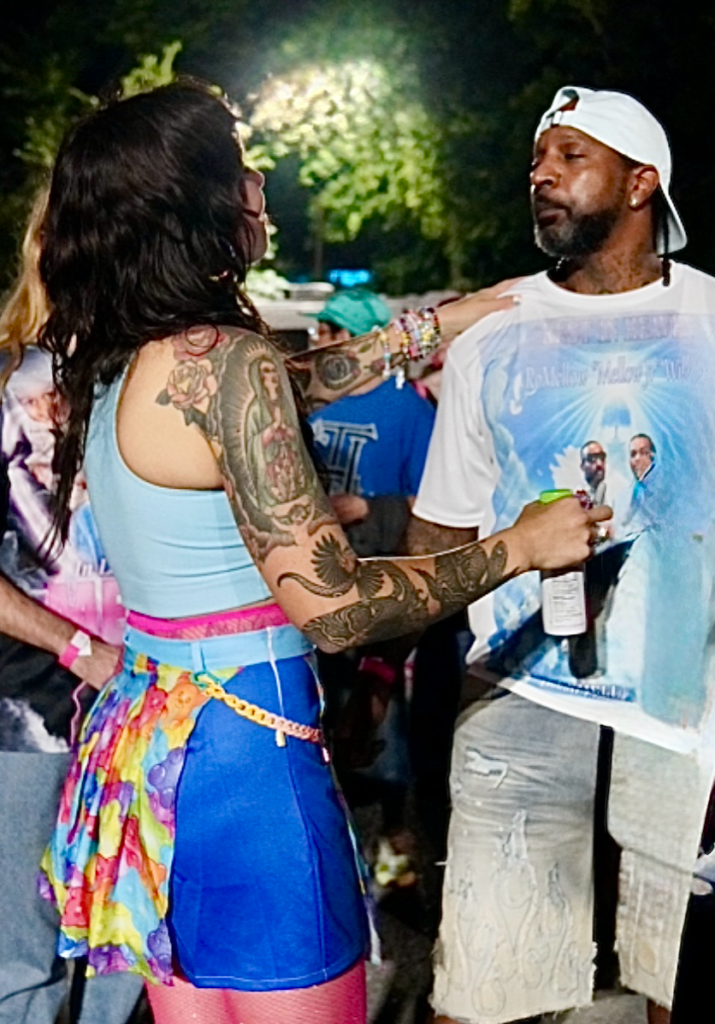
Sleigh Bells kindly invited RoMellow’s family to join them at the Granada Theater – where Alexis would sport the memorial shirt that his mother and sister Breanna designed while dedicating their signature song, “Rill Rill,” to him.
Alexis and Derek also offered an interview, utilizing RoMellow’s recorded remarks from our Sleigh Bells listening marathon to steer the conversation — and posthumously manifest his goal of contributing to Buddy Magazine. Below is our Zoom conversation from their Denver tour stop, a couple days prior, edited for length and clarity.
IAN SAINT: I really appreciate you guys rallying for RoMellow. For most of his family, Sleigh Bells will be their first rock concert. I’m blown away that you’re wearing the memorial shirt his family made, Alexis.
ALEXIS KRAUSS: Yeah, [his family’s memorial shirt] looks really amazing. We’re obviously very honored to pay tribute, and so sorry for their loss.
IAN SAINT: Alexis, the night before he died, you’d posted your dance video for “Badly” and encouraged people to learn the choreography. RoMellow (@mellowdramaticc) commented “On it!” He left you that comment just hours before we lost him.
ALEXIS KRAUSS: [sigh]
DEREK MILLER: God… Frankly, I’m speechless. There’s nothing really comforting to say with that level of tragedy. It’s a terrible loss, man.
IAN SAINT: Yes, he was only 27. But I do take solace in knowing how much joy he felt until right before he departed. RoMellow discovered Sleigh Bells in 7th grade, then was diagnosed with leukemia at 14. He fought leukemia for half his life, but Sleigh Bells brought him joy from the diagnosis to his departure — literally his last night on Earth, when he commented on your video.
DEREK MILLER: That’s incredible. It’s an honor.
ALEXIS KRAUSS: Yeah, I have chills right now. We’ve been talking a lot about how these shows have been very celebratory and joyful, so that show at the Granada will be a little extra joyful. Obviously, it’s a strange thing to celebrate — but let’s celebrate his life, and how he would have felt being in the crowd and singing along to those songs. It’s fucking hard, but we’ll be there for him.
IAN SAINT: Well, if he’d been told that you were going to wear a shirt with his face blazoned all over it [Alexis laughs], and that he’d get a song dedication with his family in the audience — man, he just would’ve been blown away. So, thank you again.
I’m going to have RoMellow lead this interview. Let’s play his remarks on the songs we reviewed, in the order he played them. Here is “Wanna Start a Band?”
New album, Bunky Becky Birthday Boy
[Sidebar: I subsequently featured this song as a 2025 music highlight in the New Year’s Eve broadcast by NPR Ohio affiliate WOUB.]
ROMELLOW WILLIAMS: This is their new song they just released. I love them — I can’t wait to see Alexis!
ALEXIS KRAUSS: [emotional laugh]
IAN SAINT: RoMellow loved the new single. You’ve been performing Bunky Becky Birthday Boy songs live. How has the response been from fans, so many of whom — like RoMellow — have followed your albums journey through stages of their own lives?
DEREK MILLER: It’s been extremely positive. We play five new songs, and they feel right at home in our set. Like what Alexis said, it feels like a celebration — the whole night’s supposed to feel like a really good party. My experience has been incredible; I’m also in a much healthier lifestyle, so my mental state is a lot better than it’s been in a very long time.
ALEXIS KRAUSS: Yeah, I agree with Derek. Our past two tours, that we did for our previous album [2021’s] Texis, was right in the middle of COVID — that changed the dynamic, in terms of the proximity we could have to the crowd and people being pretty freaked-out about being in public spaces. So it has a different energy now. There’s been a lot of dancing, sweating, crowd-surfing, jumping into the crowd and singing back with people. And we’re playing with two great musicians, Kate Steinberg and Billy Rymer; so musically, it feels pretty tight and good vibes all around.
IAN SAINT: Are there certain songs that have surprised you with how the crowd reacts today? Whether it’s a new song that you haven’t road-tested before, or an older song that resonates differently after the intervening traumas of COVID.
DEREK MILLER: “Bunky Pop” has been incredible every night; that’s been one of my favorite parts, it feels really good. Also, “Locust Laced” from Texis has been surprisingly really great — it feels like an older song, even though it’s from our previous record.
Outside of that, all of the Treats songs equally feel really cathartic — and Treats is, by far, the fan favorite. Frankly, I’m just happy anybody cares about ANY of it. At this stage in my life, you just realize how lucky you are to make anything that resonates with people on any level, and all the Treats songs certainly do. I never get sick of playing them; it’s fun as hell.
ALEXIS KRAUSS: I agree with Derek, “Bunky Pop” is a really special moment in the set — lots of kids singing along. You hope that they’ve spent time with the new album, but you really never know; so when you actually see somebody screaming those [new] lyrics along with you, it’s magical. “Pulse Strips Quiet” is the last song on the album, and it’s a little bit of a slower burn, but I think it’s been really connecting live and that’s pretty powerful.
Then, you know, we’ve been playing “Rill Rill” for 15 years. [That song inspires] a lot of genuine love, warmth, and affection out of people. Lots of people have been bringing their kids to the show, and there’ve been a lot of younger kids singing along to that one, so that definitely holds a special place in my heart.
DEREK MILLER: Yeah, “Rill Rill” especially. You know, that’s built off a sample of Funkadelic’s “Can You Get to That,” the second track off [1971’s] Maggot Brain — which is an incredible record. That loop is this breezy acoustic guitar; and all I really did is add, like, an 808 and some snaps to it. And I think that chemistry between the sample and Alexis’s vocal is really special. I’m offstage for that performance, and sometimes I’ll just go to the barricade and… [pause in awe].
And yeah, people bringing their kids has been a big thing. Some people with us from the beginning were maybe 25 when Treats came out, had a kid right after that, and their kid’s a teenager now — they bring them to our shows, and it’s incredible. I’m just so happy that it’s lasted this long. Creatively, it feels vital, and I think we’ll make records forever. But to have it still be a thing [of financial support] is special, and I just feel lucky and grateful.
Back to the beginning
IAN SAINT: I’m glad you’ve harkened back to the beginning, because the next song that RoMellow played me was Treats’ opening track, and your very first single: “Tell ‘Em.”
ROMELLOW WILLIAMS: This is from their first album. They’ve gotten more experimental — hip-hop and electronic infused — over the years. They started out very punk, and I just love their everything. Their growth has been awesome. Mind you, I was in 7th grade when I first heard them.
DEREK MILLER: Yeah, for sure. I feel we’ve retained that — for lack of a better word — “punk” [dynamic], but I know what he means. If I had to pick five favorite Sleigh Bells songs from across 15 years, “Tell ‘Em” would be in there for sure. There’s something just raw and ripping about it. I don’t mean to flatter our own music; but it just has such spirit, and it’s so simple.
Lyrically, it’s not like an older person saying “all the kids these days…” We really wrote it about ourselves. I was definitely partying really hard in that era. “Keep thinking cocaine, champagne, you better just manage your heat,” we’re really talking to ourselves and “do I really want to be that way?” It’s kind of a call to try to live a healthier, better life; and not wasting time, which is extremely precious — and kind of poignant, considering what happened with RoMellow.
The word “punk,” as much as I love that era, I guess I’d feel kind of weird saying that. There’s definitely some stuff where we’ve strayed pretty far from it, like the cello song “Loyal For” off [2016’s] Jessica Rabbit. I think some [material] has maintained that [punk] spirit, like “Locust Laced,” but we’ve certainly experimented a lot.
ALEXIS KRAUSS: I think this [new album, Bunky Becky Birthday Boy] definitely has a hearkening back to the core music tenets of Treats. It sounds like RoMellow really liked it, but I’d be curious what he thought about the evolution and how this record kind of ties things together.
IAN SAINT: Does hearing yourself on Treats sound like a different person, even though it’s the same voice, given your evolution?
ALEXIS KRAUSS: Yeah, it does feel like a different person and different world. I think so much of my experience now with our older music — especially Treats — is coming through the perspective of our fans. It’s like you make this baby, you release it into the world, and then people internalize it in a multitude of ways. Now, getting to hear all those stories and experiences [like RoMellow’s] reflected back on us, it almost doesn’t even feel like something we created — it feels like this thing that’s been created for us, if that makes any sense.
DEREK MILLER: Yeah, definitely.
IAN SAINT: It absolutely makes sense. Then how does it feel to hear someone like RoMellow, a rapper from Texas — when you’re up in New York City — say that hearing your first album in 7th grade made such an impression on him, provoked him to expand his horizons sonically and artistically, and witnessing your evolution since then has inspired him?
ALEXIS KRAUSS: It sounds cliché — but that’s the power of music, right? The ways in which it can impact people from so many different backgrounds and cultures that would seemingly never exist in the same plane of reality. And, yeah, it’s an honor [to hear stories like RoMellow’s].
We’ve always wanted our music to be able to transcend genre, and it moves us deeply when we see a diverse crowd of young people, different races and backgrounds, and queer people coming out. It’s pretty magical that you can come from such diverse backgrounds, and yet connect with the same song on the same album. We really, really love that; and it really means so much to us.
DEREK MILLER: Yeah, I think that’s a larger — and probably way more important or relevant — part of what music does for society. Sports, movies, and things of that nature do it, too. Things that fall under the umbrella of a luxury [of doing this for a living] where you’re not a first responder — what you’re bringing to the table is sort of this abstract thing, but at its best, music [is a unifier]. Music in the ‘60s was helping to put a dent in the color line; “hey, we’re all under this one roof tonight, we have a shared passion, maybe we’re not so different.” Then there is how music has not just given me life, but [also] saved mine.
ALEXIS KRAUSS: I think [RoMellow’s Sleigh Bells account] is also a testament to Derek’s production, the fact that he’s pulling from so many different influences — whether it’s hip hop, hardcore, pop music — and I think that does speak to the wide variety [of fans like RoMellow].
IAN SAINT: Since we’re getting into sociology, I have to examine the context of when the band was started.
DEREK MILLER: July 10, 2008 is the night that we met, and agreed to work on music. And I think a few days after that we met up [to do so].
IAN SAINT: So just three months later, the market crashes, and the new band is contending with the worst economy since the Great Depression. What was it like to launch your collaboration at that precarious time, in retrospect — trying to lift off when things are crashing down, especially just being in your 20s?
ALEXIS KRAUSS: I made the decision to step away from a teaching career to pursue the band. It was definitely a disconcerting time to be a young person establishing themselves with some sort of financial security — and then being like, “yeah, cool, I’m gonna leave this job and benefits and tenure, and just throw myself into the band.”
But it’s a strange thing about the music industry — and also, I think, one of the fucked-up things about the music industry — it’s relatively insulated from a lot of major economic meltdowns. So it was a little strange; we had this pretty quick ascension, and were kind of insulated from a lot of that economic fallout so many people experienced, and were able to tour. It was kind of a little bubble.
DEREK MILLER: Yeah, it was. Also, if I’m being honest, I never had that need to “make it” — by which I mean, to make a bunch of money. When I moved to New York, I just wanted to find somebody to make rad music with. I remember when Lehman [Brothers declared bankruptcy on September 15, 2008], one of my friends who’s dialed into [Wall Street] was explaining the significance to me. I was like, “Jesus Christ!” But I don’t know that I was scared. I kind of figured, “Well, I’ll just wait tables and we can make some music.” And then everything beyond that has felt like an extreme luxury and privilege. I just wanted to play a show in Brooklyn somewhere once or twice — so it wasn’t like a grand plan was foiled. It is great to make a living at [music], but we were going to be working for a living one way or another.
The middle years
IAN SAINT: Let’s move up to your middle period. RoMellow loved the Jessica Rabbit album, released in 2016. He played “Rule Number One” for me.
DEREK MILLER: Aw, that’s one of my favorites. I love that song.
ROMELLOW WILLIAMS: Derek is the instrumentalist of the duo. Around this time, he was going through a lot of depression, suicidal thoughts and things. That’s what inspired this, and a few other songs they wrote.
DEREK MILLER: Yeah, that’s accurate.
IAN SAINT: So, a decade has elapsed since you went through that challenging time. What is it like to revisit those songs, and hear how much people like RoMellow love them? And can you share insight on what got you through that tough time — especially considering things like COVID happened in between?
DEREK MILLER: When I think about that song now, I feel relief that I did make it out. It was only in the past few years that I got out of the woods of being in a life-threatening situation. Addiction is dangerous, especially at my age — I’m 43 [now 44] — and I’m relieved. Some people are still in their own version of that black hole, and I think “Rule Number One” speaks to them in a way that is honest.
I think self-sabotage has been extremely common. It varies in its extremity within each individual; but I think everybody does it in some way, shape, or form, and maybe the song touches that nerve and it makes people feel less alone. It’s like, “Yo, I know you feel like an island right now; and frankly, you just feel fucked. Don’t do the dumb thing; don’t hurt yourself. Stay in it, and just take it one day at a time.” I hate being patient; but patience, unfortunately, is what it takes.
ALEXIS KRAUSS: Yeah, absolutely. I’ve seen the amount of people that have come up to Derek in solidarity and said “thank you for that song.” Whether they’re still going through it or if they’re sober, whatever it is, there’s been a lot of catharsis and work that’s happened as a result of that song.
DEREK MILLER: It doesn’t have to be limited to drugs or alcohol; it can even be damaging meaningful relationships in your life, or making decisions that you regret. A lot of times, people sacrifice the future for the moment — that’s usually a youthful thing, and sometimes it’s fun and playful, but sometimes those decisions have long-term consequences.
I think about RoMellow. He must’ve felt some really dark days, having cancer that young, I’d imagine. Hopefully a song like that made him feel less alone. That was the point.
IAN SAINT: I hadn’t realized this until you said that. He was supposed to graduate high school in 2015, but wound up getting his diploma in 2016 — the year of Jessica Rabbit — because of delays from a rough patch of the cancer. This album might have brought solace in a frustrating part of his life.
You two are a duo, and it can be hard for duos to keep the peace. I think of poor Hall & Oates, who did it for 50 years, but now they’re swamped in litigation. Alexis, I would imagine that the Jessica Rabbit period could also be challenging for you — doing these cathartic songs justice in your delivery, but also caring about the well-being of your music partner. What was it like for you to witness that and walk that tightrope? And what were your takeaways from it, so that you guys were able to keep going a decade later?
ALEXIS KRAUSS: Derek and I’s creative relationship has always been one in which… [pause]. He will send me lyrics, and I know what he’s going through because I know him as a dear friend; but I also know a lot of his inner thoughts because of the lyrics. It can be really challenging to try and give voice to that melodically — meeting the instrumental where it’s at — and emotionally create a vocal that’s going to connect with people, that addresses the gravity of the situation.
So I think there were lots of unspoken things, spoken through the lyrics, so that we were able to understand each other. But also, I think Derek and I have a great ability to communicate with each other, and we care about each other — I check in on him, and he checks in on me, and we’re able to be really vulnerable. Had we not been able to be vulnerable with each other, that’s when the animosity and resentment builds; and it seems like that’s when things really start to break down. Because we’ve always maintained a really honest communication stream, it’s enabled us to get through some shit that would normally break other bands down.
Derek also has a lot of respect for me, and my time, and my life — I’m a mom now, and he takes that super seriously. He knows that I love him; but I also don’t have a super high tolerance for people being fucked-up. I’ve dealt with a lot of alcoholism in my life, and he’s really never let that impact the band or our livelihood. A lot of his struggle has been private, and obviously I care for him and I worry for him; but he’s also insulated me from a lot of the worst stuff, I think out of his love for me.
DEREK MILLER: Yeah. I also think that lasting this long, for me, transparency is a big deal — not just because it keeps everything on the up and up, but it keeps things really exciting. If you’re bored or uninspired, just start telling the truth. What’s transparency? It’s the truth. And the truth is usually ridiculously interesting. So that is key: it’s exciting for me to be transparent.
Truly, just start telling the truth with your partner — if things are tense in any relationship in your life, or especially with yourself, just start being honest. Be transparent, and things get interesting really fast. I think most people want to keep things interesting. That’s why we tell stories, both real and fiction — to learn about ourselves and others, and frankly just to keep things spicy. That’s what transparency does, and we’re both really forthcoming people. I don’t like to sit on things; it’s like, just spit it out.
IAN SAINT: RoMellow played me one other track from Jessica Rabbit: “Crucible.”
ROMELLOW WILLIAMS: I love how [the song’s transitions] are mixed. This is ear candy for me.
DEREK MILLER: Yeah, lots of ear candy in that one for sure.
IAN SAINT: Have you ever performed “Crucible” live?
DEREK MILLER: No, we never have. It’s one of the [unperformed songs] that I get asked about for sure. Next time around, it’s something that we should consider. [From Jessica Rabbit] we’ve usually played “Rule Number One,” “I Can Only Stare,” or “It’s Just Us Now.” It’s great to have a lot of songs to choose from when you’re building a set, but it also means that a lot of great ones get left out. But I love “Crucible.”
IAN SAINT: How do you come up with these transitions, and songs that are packed with curveballs — which delighted RoMellow — but without being disjointed? That’s a tough balance.
DEREK MILLER: I don’t know. I’m always just chasing the feeling, you know? It really is the abstract part of the process. I’m just chasing the thing that’s going to give me goosebumps. That’s the number one thing: whatever’s going to make you sit back and shiver, in a good way — like, “oh, that is fucking good.”
If I get that feeling from something, then I tend to trust it. Sometimes that feeling fades [with time], and sometimes it doesn’t — “SWEET75” [off 2021’s Texis], I love as much as the day that we wrote it. Same with “Comeback Kid” or “Born to Lose” [off 2012’s Reign of Terror] or some of the Treats songs.
I’m always trying to make records that I want to listen to. I can hear Sleigh Bells songs in my head that don’t exist yet, and I want to hear them. If I was getting it from the outside world, then we wouldn’t make it.IAN SAINT: After Jessica Rabbit selections, RoMellow played me “SWEET75” off the next LP, Texis.
DEREK MILLER: I love that one. It’s in our set on this tour.
ALEXIS KRAUSS: That’s one of my favorite songs. It feels different than anything we’ve made. Vocally, it cascades — the second half is this endless, emotional kind of… I don’t know, I go into a very strange headspace when I perform it. It’s kind of a trance.
“Rill Rill” in retrospect
IAN SAINT: I’ll wrap with “Rill Rill,” the last song RoMellow played me. And I’m shook as I play back this recording, because what you’re about to hear is our final in-person exchange — “Rill Rill” is playing as I’m getting out of his car and we said our last goodbyes, while the chimes sound and Alexis is singing “You’re all alone, friend? Pick up the phone, then. Ring, ring, call ‘em up, tell ‘em ‘bout the new trends.” RoMellow told me “We’ve got plenty of good things and nights ahead of us,” and that was my last glimpse of him alive. This song is so cinematic, anyway; but there is so much striking metaphor there.
DEREK MILLER: Damn. That’s so heavy.
ROMELLOW WILLIAMS: Oh, this is the first song I heard by them! The first song. It was their first mainstream [success] single, and… this song introduced me to my emo phase, actually.
DEREK MILLER: Amazing. Maybe this seems a little too on the nose — but that song, to me, is like you’re in the passenger seat of a car with one of your friends or someone that you love, the weather is perfect, the window is rolled down, and you’re cutting through the wind with your hand. I know that’s really corny, but it’s also a great moment. That song always makes me feel like that; it’s wholesome, I guess, maybe to a fault. And the fact that [you hearing this in the passenger seat of RoMellow’s car] so close to the end of his life is incredible.
ALEXIS KRAUSS: Yeah, that will definitely be the one we’ll send out to RoMellow [at the Granada Theater]. It’s yet another story, layer of meaning, and life that’s been given to that song — and another thing to remember every time I’m singing it.
So thank you for sharing that story, and I’m so sorry for the pain — but also, what a beautiful thing that we can connect over. The Granada is honestly one of our favorite venues that we get to play in the country; and actually, [this show is] the 15 year anniversary of Treats. It’s a special show to begin with — so to add the additional layer of honoring RoMellow is just pretty amazing.
IAN SAINT: The coincidence of honoring RoMellow on Treats’ 15th anniversary is amazing, because here we have his testimony of how that album opened his world. Now when RoMellow’s family attends the Granada in his absence, Sleigh Bells will be their first rock concert.
DEREK MILLER: We look forward to seeing them.
ALEXIS KRAUSS: For sure. And thank you, as a friend, for doing this for him and bringing it to our attention.
IAN SAINT: The first thing I said when I learned that he died was knowing how many dreams he had, and he just barely missed his long-awaited first Sleigh Bells concert — but this would have far surpassed his dreams, so thank you.
DEREK MILLER: Our pleasure, Ian.
Sleigh Bells’ seventh show at the Granada
A couple days later, at the Granada Theater, was a profound experience.
I arrived early to provide Sleigh Bells’ tour manager with the gorgeous, vibrant memorial shirt that RoMellow’s mother and sister Breanna ordered. I also transmitted the Voice Memo of him speaking about “Rill Rill,” so that they could play RoMellow’s remarks in concert. Then I looked after distributing the tickets that Sleigh Bells so generously offered his loved ones. This was the first rock concert for all RoMellow’s family members, including his parents.
The concert opened with “Badly,” the new album’s cheerleader anthem. I thought of how RoMellow excitedly commented on Alexis’ “Badly” choreography video just hours before he left this mortal coil, exactly 4 weeks prior.
It was fun to watch Sleigh Bells’ fans follow along, but the surreality of it all — combined with my preoccupation about his family enjoying themselves despite the circumstances, and my nerves about properly documenting the band’s tribute — made the rest of Sleigh Bells’ set a blur. I wish I could give a more detailed review.
But I will say, they seamlessly transitioned from their new record to Treats’ “Infinity Guitars,” and I was impressed by how cohesive the entire show was. Sleigh Bells’ discography spans several albums across 15 years, but they don’t sound pegged to a particular era. They attract a spirited rock crowd, and this was a general admission show; but everyone was very polite. After Sleigh Bells blazed through 14 songs, the moment I’d been anxiously awaiting arrived.
Eulogy
Video of Alexis eulogizing RoMellow, playing his reflection on “Rill Rill,” and then performing the song while wearing his memorial shirt, is below. (Immense gratitude is owed to Allison Gordon — who took me and RoMellow to Cyndi Lauper’s farewell show six months prior — for filming this perfectly.)
As Alexis put on RoMellow’s memorial shirt and fought tears, the crowd became silent as she explained who he was. The respectful decorum of Sleigh Bells’ fans was remarkable. Alexis pointed to me and RoMellow’s family, seated in the balcony, and the audience turned and cheered for us.
Then, with RoMellow’s face prominently depicted on Alexis’ shirt, the Granada Theater audience heard him speak about how Sleigh Bells changed his life — a sound bite sourced from my last few minutes with him. The crowd laughed when RoMellow said that “this song introduced me to my emo phase, actually” — which is funny (and awesome) to juxtapose with the brawny 6’4” rapper’s image. Alexis dedicated the song to RoMellow and “your fucking emo phase.”
Midway through “Rill Rill,” Alexis barreled into the crowd and up the stairs to our balcony pod. The audience turned and faced us. It was unbelievably surreal to watch the vocalist of the song that RoMellow played while I hugged him for the last time, leading nearly 1,000 people to serenade us with that song.
Notice at the video’s 4:08 mark, a heavenly chime rings while Alexis hugs RoMellow’s mother — and her shirt beams “Forever You Live On.” After Alexis blows a kiss to his parents and descends back to the stage, RoMellow’s mother turns and the image of his smiling face glows on her shoulder.
It wasn’t until this moment that I realized how angelic the flute sounds at the end of “Rill Rill” sound, too. In our interview, Derek Miller underplayed his additions to the Funkadelic sample — but the chimes and flute are brilliant contributions, that make watching this experience feel truly ethereal.
For the encore, Sleigh Bells returned to play the closing track from Bunky Becky Birthday Boy: “Pulse Drips Quiet” — the last song for the last Sleigh Bells album in RoMellow’s lifetime. With the refrain of “I’ll be true ‘til death,” it was an appropriate coda for what just transpired. Speaking about this track to Flood Magazine, Alexis Krauss reflected on “hope being a discipline, and you have to be rigorous.” Having this experience with Sleigh Bells a couple weeks after burying RoMellow was a real-life validation to Alexis’ statement — and RoMellow’s ability to keep finding joy through the throes of leukemia, right up through his last night on Earth, is a testament to that as well.
Sleigh Bells ended the show with Treats’ stomping “Crown on the Ground,” which had RoMellow’s aunt and young cousin cheerfully thrashing about in the balcony. As they left the stage, Alexis proclaimed “Happy Birthday, Treats! We love you, RoMellow!”
Gratitude
RoMellow’s mother, Tashia Williams, provided this statement: “I’m so grateful for this experience. My son was very diverse and loved trying new things. He was the only one that could get me to step outside the box, like catching my first flight when he was sick in Chicago this year. This tribute meant so much to me. It was so thoughtful and sweet, and I know RoMellow was smiling down on us. I’ve watched the video of Sleigh Bells’ dedication performance so many times, and hearing his voice makes me cry. I miss my son so much, and I can’t thank Sleigh Bells enough for this wonderful tribute. RoMellow’s spirit was there the whole time. I will always remember this.”
RoMellow’s father, Mario Hall (nicknamed “Mellow”), added: “Thanks to Sleigh Bells for your hospitality and the tribute to Mellow Jr. I’m proud that my son made a good impression with different ethnicities and diverse genres of music. Thanks for stopping your concert and playing my son’s voice. Long Live Mellow Jr.”
For me, Sleigh Bells’ tribute to RoMellow was nothing short of amazing. I’d felt suffocated by the tragedy of RoMellow’s death, including the sadness of him not even living to see this concert — and I imposed tremendous pressure on myself to manifest a commemoration of RoMellow that would grow knowledge of his memory. Sleigh Bells and their management responded to my bold inquiry quickly, thoughtfully, and benevolently. This lifted a huge weight off my spirit, and I’m infinitely grateful.
“So this is it, then?”
It’s taken me a long time to articulate what that experience at the Granada Theatre meant, which has evolved as I’ve contended with the permanence of RoMellow’s death.
When I left RoMellow’s car in our final encounter, he told me that “We’ve got plenty of good things and nights ahead of us.” This was just after he sang along to the “Rill Rill” lyrics of “You’re all alone friend? Pick up the phone, then. Ring-ring, call them up, tell them about the new trends.” This final farewell between RoMellow and I wound up on the recording I’d made to prepare for possibly interviewing Sleigh Bells.
Playing this recording back after RoMellow died left me stunned. We did not wind up having “plenty of good things and nights ahead of us” — the next time I saw him was at his funeral. Hearing RoMellow and I express our excitement for future adventures together, weeks before death quashed that excitement, while Sleigh Bells played in the background — with Alexis’ ethereal vocals, and the heavenly flute and chimes — was like listening to a tragic play, except it was our reality. Sometimes truth really is stranger than fiction.
“You’re all alone, friend? Pick up the phone, then. Ring-ring, call them up, tell them about the new trends.”
Alexis and RoMellow sang these words as I listened back to mine and RoMellow’s final seconds together. I heard RoMellow’s excitement about Sleigh Bells’ show at Granada Theater. Then I got the wild idea of reaching out to Sleigh Bells, and seeing if they would be receptive to commemorating him in some way. This was only 5 days before the show — and Alexis had her 1-year-old on the road with her — so I did not know if anything was feasible. But they got right back to me, and the rest is now history.
When I contacted the band, I hadn’t realized that the Granada Theater show coincided with Treats’ 15th birthday, nor did I know that the Granada is one of their favorite venues to play — dating back to their first show there in 2011, while touring behind Treats. Derek and Alexis got to hear RoMellow vocalize his effusive excitement about watching Sleigh Bells perform. If RoMellow had any idea that his parents would witness Alexis wearing a shirt depicting vibrant pictures of him, playing his voice, and leading the entire Granada Theater into singing “Rill Rill” — the Sleigh Bells song that changed his life in 7th grade — up to them, he would’ve imploded.
Thanks to Sleigh Bells’ amazing commemoration in concert, I had an epiphany that assuaged my fears that RoMellow’s dreams were extinguished by death. A theater full of strangers had just cheered his name, seen his radiant face, and heard his passionate voice in a powerful memory that they’ll carry with them. After the show, RoMellow’s family was approached by several people to express their support.
I realized that RoMellow’s ability to keeping growing in this world didn’t have to end with his life. And now another dream of his — contributing to the legendary Buddy Magazine, via our Sleigh Bells interview that was piloted by RoMellow’s remarks — has just been fulfilled after his passing.
The first time RoMellow and I hung out, he was excited to attend “Emo Karaoke Night” — singing with a live band — and said that he might choose a Sleigh Bells song. In our last minutes together, he was acquainting me with Sleigh Bells’ catalogue. And in the aftermath of his untimely death, Sleigh Bells dedicating their signature song to RoMellow at the legendary Granada Theater helped me to heal. Mine and RoMellow’s timeline — from meeting at the State Fair of Texas, to that last hang in his car culminating in this interview — feels like a movie in retrospect; and Sleigh Bells played a role at the beginning, end, and epilogue.
Sleigh Bells are currently working on their next album. Alexis recently rescued a new dog, Piper. Follow the band on Instagram and Facebook @sleighbells, and their official website: https://www.tornclean.com.
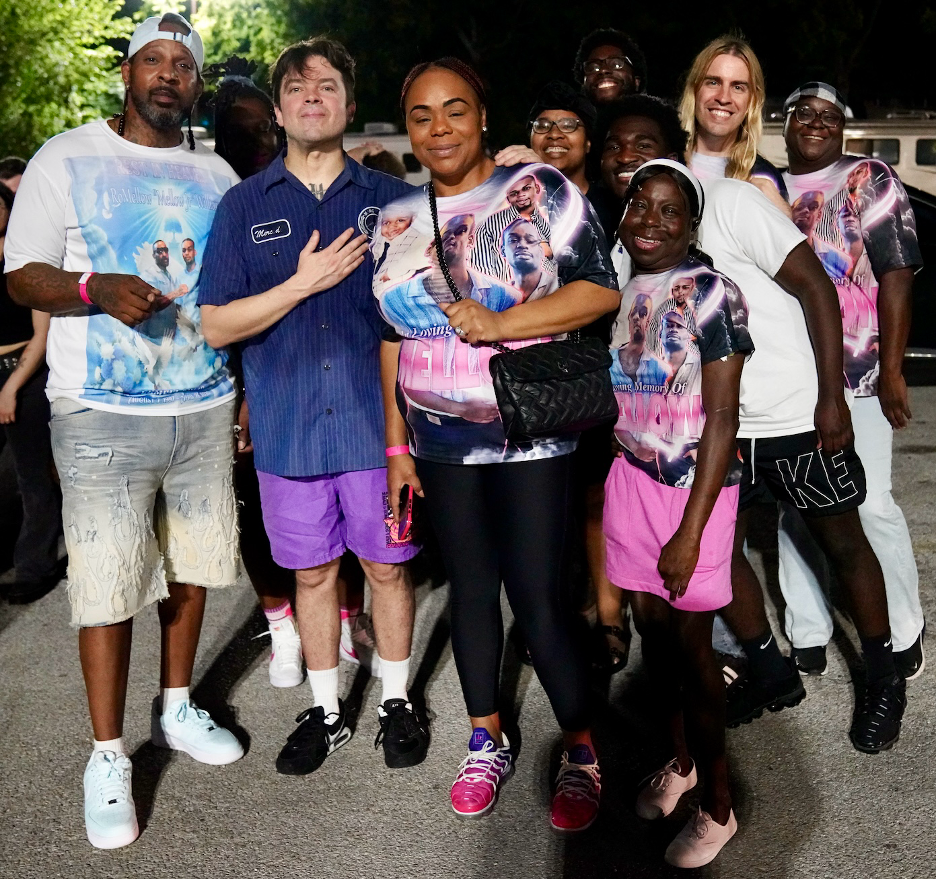
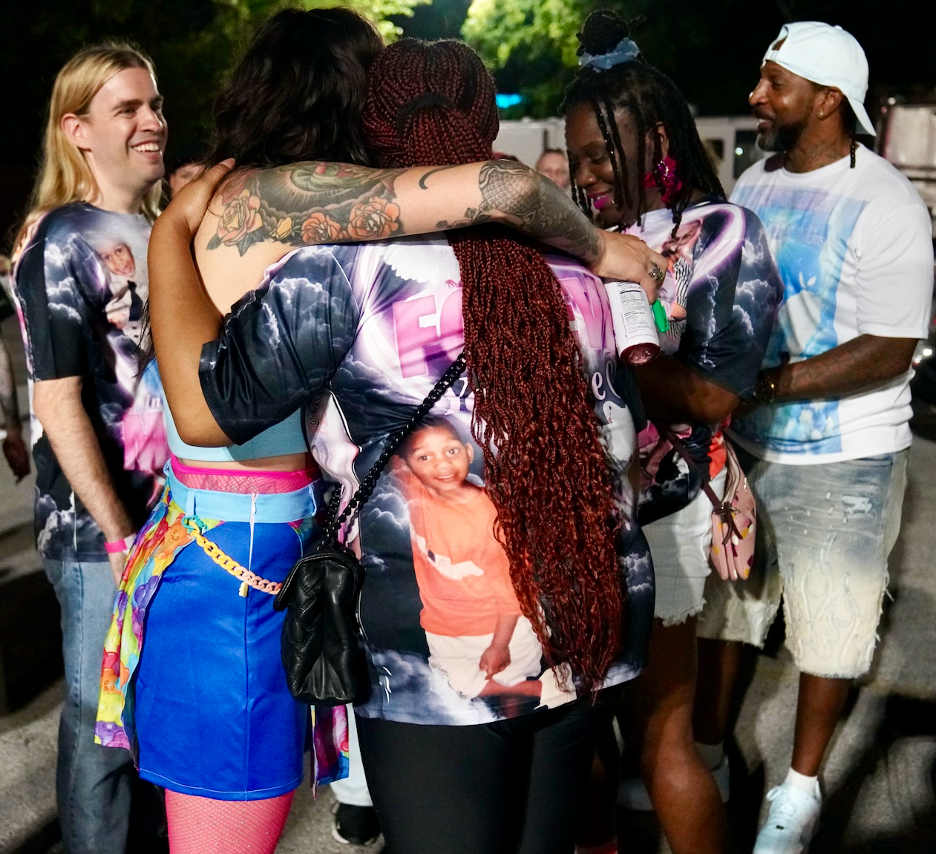
Derek Miller of Sleigh Bells poses between RoMellow Williams’ parents after their show at Dallas’ Granada Theater on May 24, 2025. Photos by Erin Nicole Parisi


